- Bedrooms: 10
- Bathrooms: 8
- Size: 1366.23 m²
- Price: $65,000,000
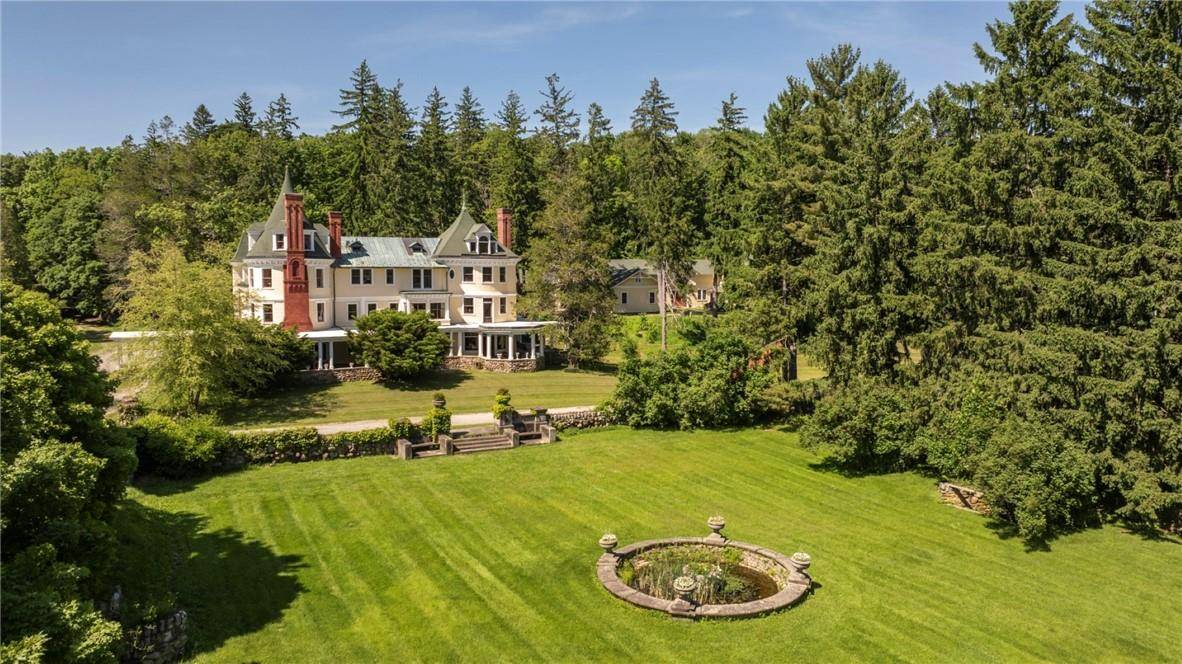
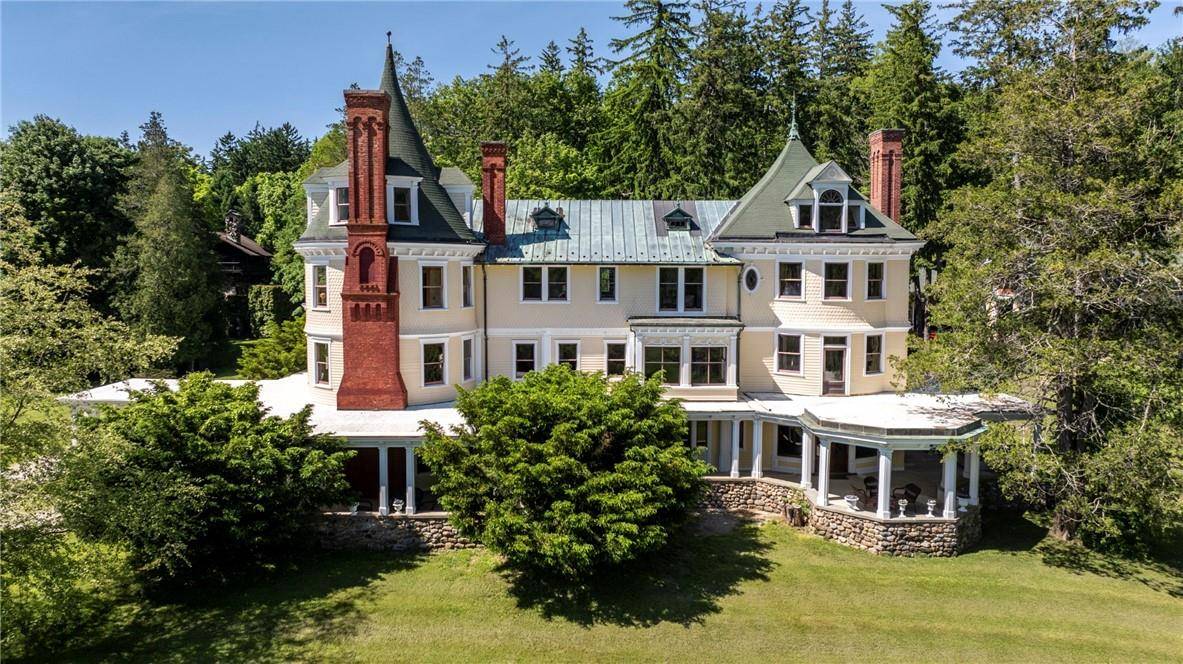
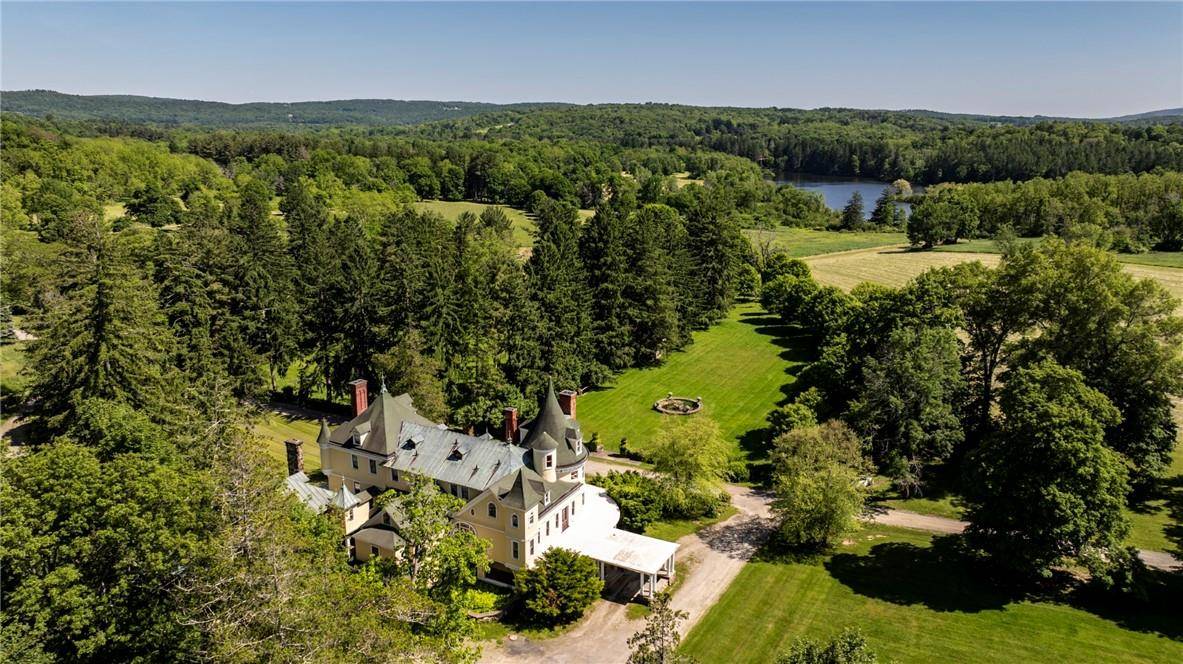
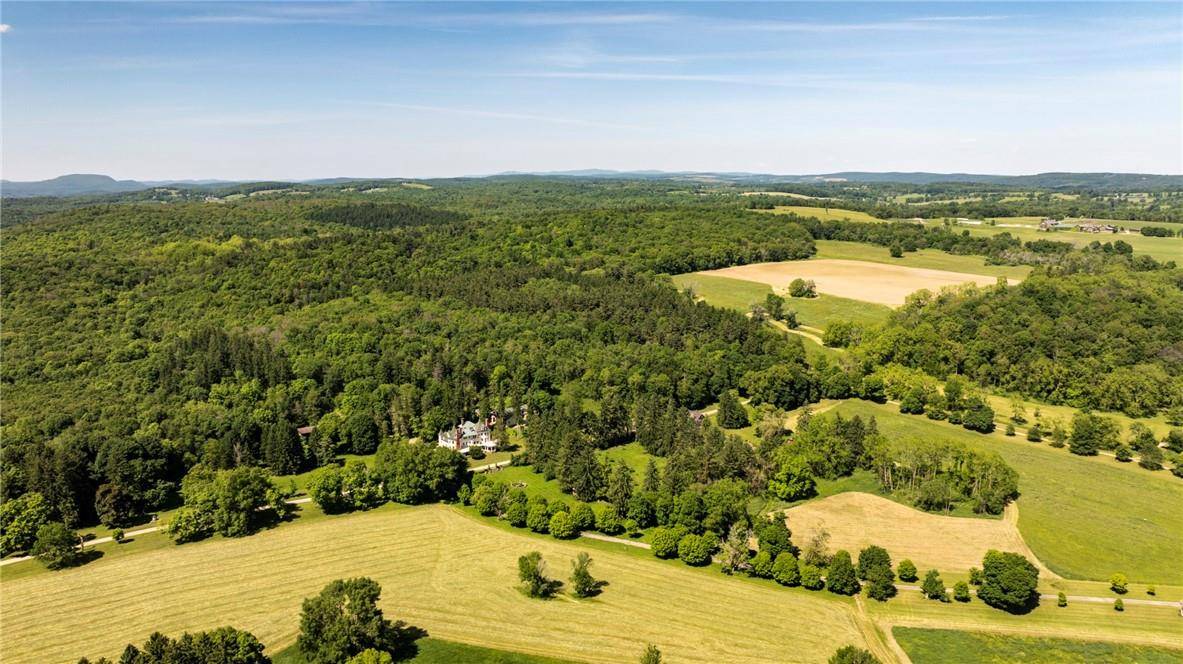
The Hitchcock Estate: 2,078 unbroken acres in the heart of Millbrook
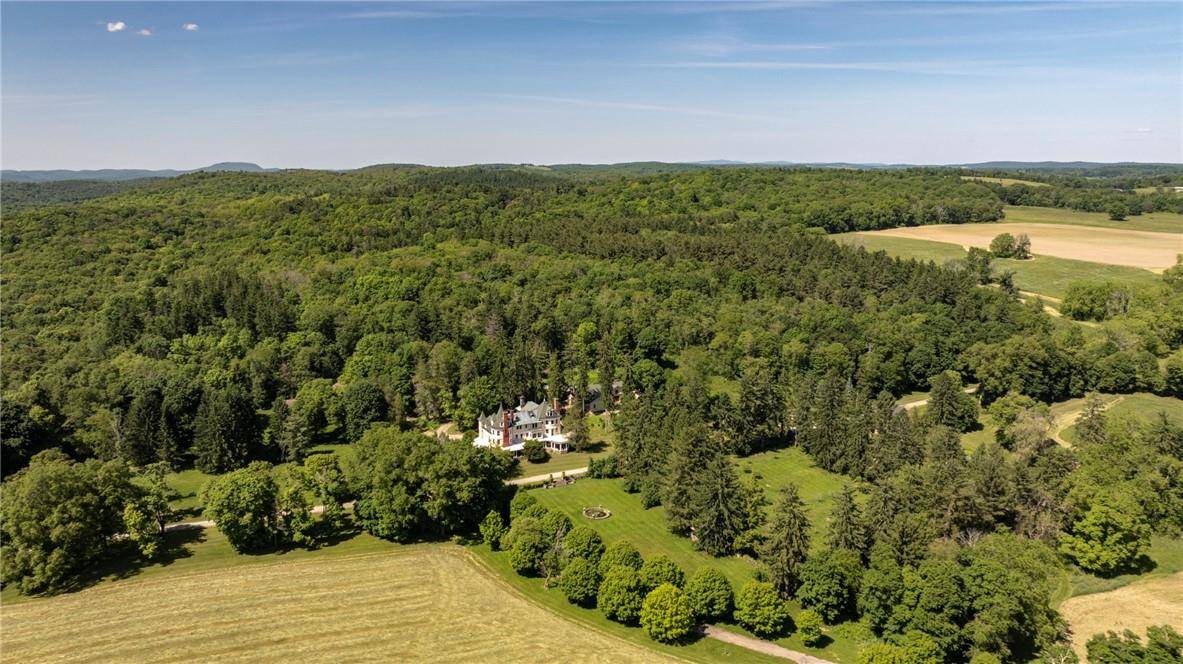
There are large properties and there are rare ones. This is both at once. The Hitchcock Estate covers 2,078 acres in a single continuous block in Millbrook, in the Hudson Valley, an hour and a half to two hours' drive from New York City. The land has been held together since 1889 and has never been divided. In more than a hundred and thirty years it has had only four owners.
What is for sale here is not a house with land. It is a complete domain: two principal residences by named architects, a group of stone outbuildings, two lakes of unusual size, working hay fields and a functioning cattle operation.
The main mansion
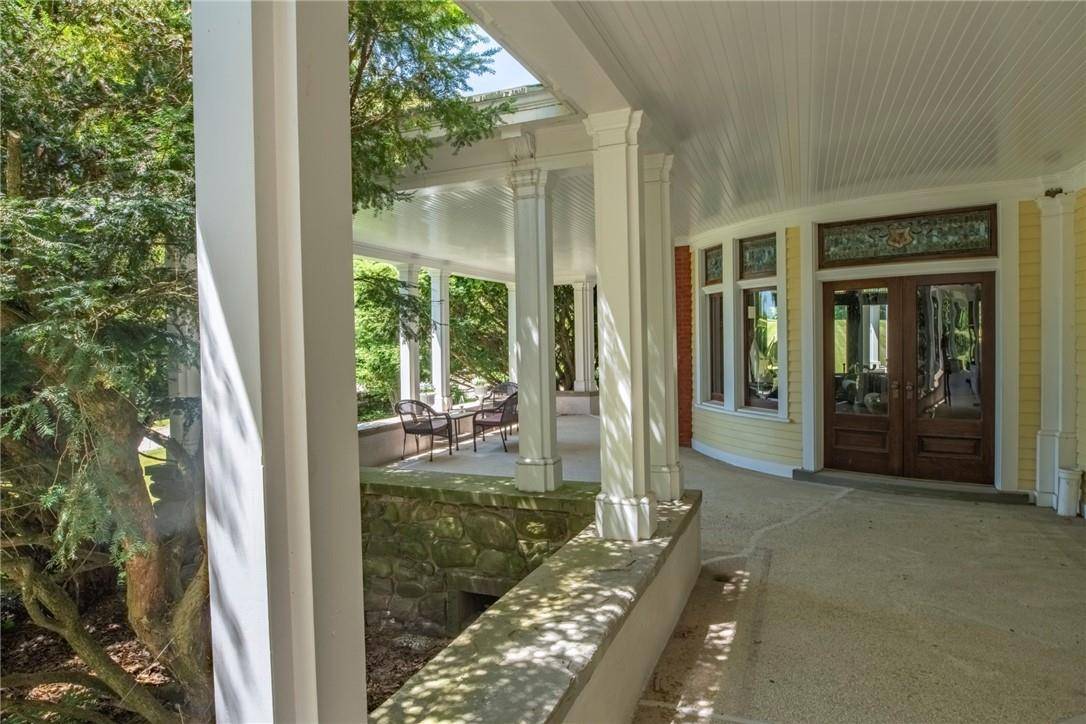
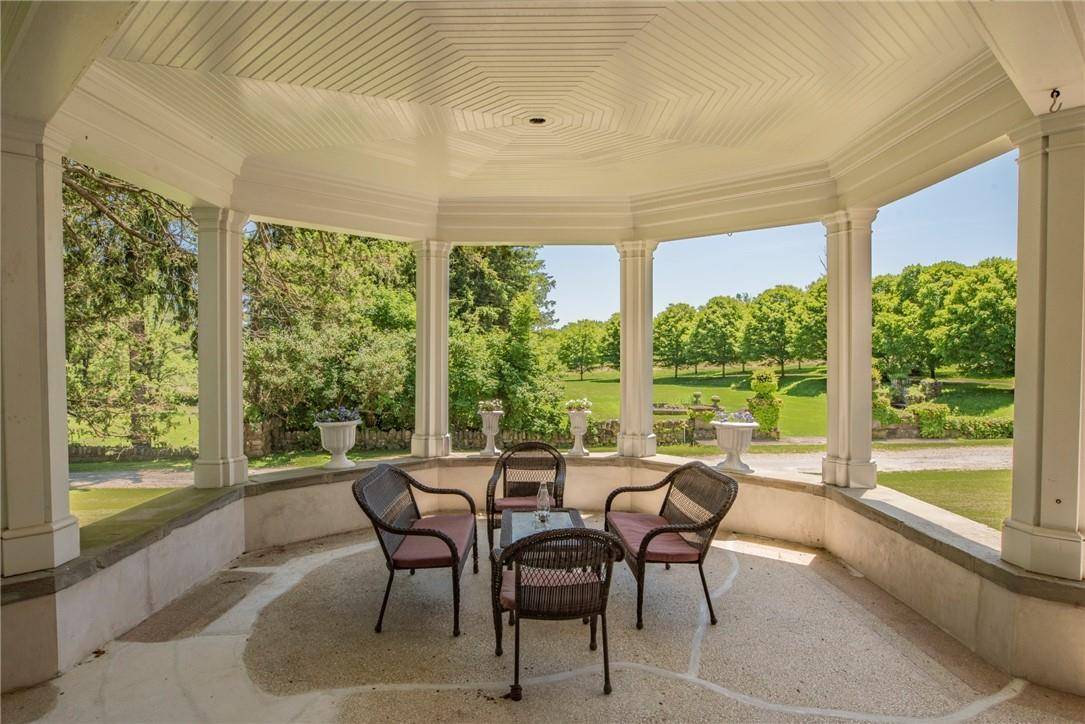
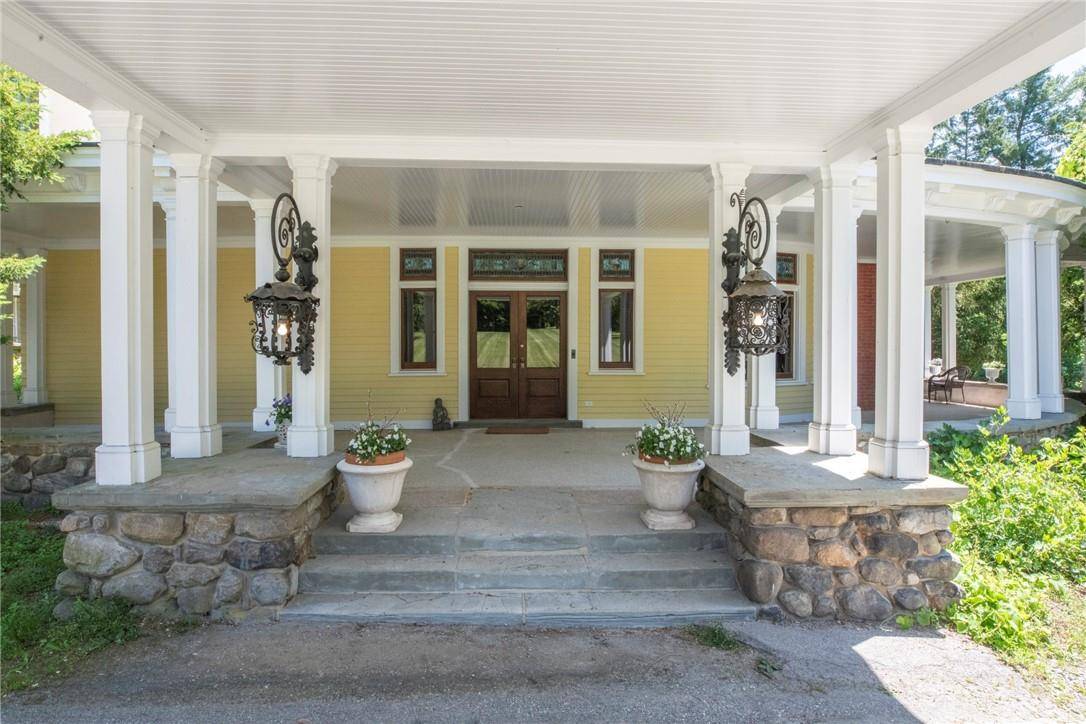
Restored and separately deeded, it measures 14,706 square feet and was designed by James E. Ware in the late nineteenth century. It is the centrepiece of the estate and what sets its character: Gilded Age country-house scale, with the build quality of that period.
The Bungalow, by Addison Mizner
The guest house, known as the Bungalow, measures 10,000 square feet and was designed in 1912 by Addison Mizner. It is worth spelling out what that means: Mizner is the architect who invented the Palm Beach Mediterranean idiom and shaped the taste of an entire generation in Florida. A Mizner building in New York State is a rarity, and it is a point of value in its own right, independent of everything else.
The other buildings
The estate includes a stone bowling alley and a whimsical gate house, both in Bavarian style; a three-bedroom chalet; a carriage house with two apartments; two farmhouses; barns; and a former tennis pavilion. The stone farm buildings, updated over the decades, are the same ones the first owner had built more than a century ago.
The land: lakes, hay and cattle
The parcel is rectangular and fronts four roads, which is unusual at this size and has practical consequences for access and flexibility of use. There are two large lakes, of 45 and 60 acres, plus smaller ponds. The land alternates woodland and open field, and is currently farmed on a self-sustaining basis: the hay fields supply the estate's own cattle operation.
A history in three layers
Few private American properties carry a documented biography like this one, and it is part of what is being bought.
1889 — Dieterich and the Gilded Age
The estate was assembled from five neighbouring farms by Charles F. Dieterich, a German-born industrialist who made his fortune in acetylene and was among the founders of Union Carbide. He built at the height of the Gilded Age, with the ambition of scale and European craftsmanship that defined the moment. The domain later served as a private hunting preserve for Standard Oil executives.
1963 — the Hitchcocks, and the name that stuck
In 1963 the property was bought by William "Billy" Mellon Hitchcock and his brother Tommy, heirs to the Mellon fortune — hence the name by which it is still known. Over the following five years, from late 1963 to early 1968, the mansion was given over to Timothy Leary and Richard Alpert and the Castalia Foundation, who established here the communal and research centre that made "Millbrook" a word in American cultural history. It is a documented episode and it is, today, one of the reasons this property's name is still searched for.
The last sixty years
Since then the domain has been in the hands of a single owner, who has maintained and cared for it. It is that continuity — and the absence of any subdivision — that allowed it to reach the market whole, which is close to unrepeatable at this distance from New York.
Millbrook and the Hudson Valley
Millbrook sits in Dutchess County and has long been a weekend and summer destination for those leaving New York City. It is horse country, with one of the oldest mounted hunting traditions in the United States, and it holds an unusual density of institutions for its scale: the Cary Institute of Ecosystem Studies, Innisfree Garden, Millbrook Vineyards & Winery and the zoo at Millbrook School. This is a landscape of large houses, working farms and discreet living — the opposite of Hamptons display.
Points to consider
A property of this nature calls for an honest reading of its costs and its constraints. None of this disqualifies it; all of it belongs in the decision.
Cost of ownership is the main variable. Maintaining 2,078 acres and more than ten structures — two of them over ten thousand square feet each — is not comparable to maintaining a country house. It means property taxes at estate scale, continuous maintenance of century-old buildings, insurance, and the farming operation itself. Ask for the actual figures from recent years, not estimates.
Farming may be a condition, not just a revenue. In New York State, agricultural assessment regimes depend on the land remaining in genuine production, with their own requirements. If the buyer's plan is to reduce or stop the activity, the tax picture changes — confirm this with local tax counsel before buying, not after.
Restoration is permanent work. Buildings from the late nineteenth century and from 1912, even well maintained, require cyclical intervention in roofs, masonry, joinery and systems. A serious survey, building by building, is not a formality.
Liquidity at this level is thin. In the $65 million bracket the universe of possible buyers numbers in the dozens worldwide, and selling times are measured in years. This property has been on the market since 2024. That is not a sign of trouble — it is the nature of the segment — but a buyer should assume the exit is not quick.
There is no train at the door. The reference rail link is Metro-North's Harlem Line, which terminates at Wassaic, a few minutes' drive away. For New York it means a car and an hour and a half to two hours, depending on traffic. And winter in the Hudson Valley is a real winter, with what that implies for access and for heating large buildings.
Essential checks before proceeding
Beyond the usual — title, survey, easements and zoning compliance — a property like this calls for three specific checks. First, the existence of conservation easements or any recorded restrictions, which limit building and division and which here weigh heavily on value and future use. Second, the subdivision rights actually available under town zoning, if that possibility forms part of the intention. Third, the condition of the lakes, dams and watercourses, with the permits and maintenance liabilities attached, which on estates with water bodies of this size are not trivial. Always engage independent legal and tax advice in New York State.
In summary
The Hitchcock Estate is one of those properties where the rarity lies not in the house but in the whole: 2,078 never-divided acres two hours from Manhattan, with two architect-designed residences, an intact domain of stone buildings, two lakes and a working farm. Add a history running through the Gilded Age, the Mellon fortune and an entire chapter of 1960s American culture. This is an asset for those seeking permanence and scale, not a quick return — and it requires going in with open eyes about the cost of keeping something like it. But continuous land of this size, at this distance from New York, does not come back to the market often.
10 bedrooms in nearby cities
- 10 Bedroom Home for Sale in Suffern - New York - USA Suffern $2,999,000
- 10 Bedroom Home for Sale in Pine Plains - New York - USA Pine Plains $3,995,000
- 10 Bedroom Home for Sale in Brooklyn - New York - USA Brooklyn $999,000
- 10 Bedroom Home for Sale in Middletown - New York - USA Middletown $630,000
- 10 Bedroom Home for Sale in Jamaica - New York - USA Jamaica $949,000
- 10 Bedroom Home for Sale in Cambria Heights - New York - USA Cambria Heights $1,528,999