- Bedrooms: 8
- Bathrooms: 14
- Parking: 6
- Size: 1481.25 m²
- Price: $75,000,000
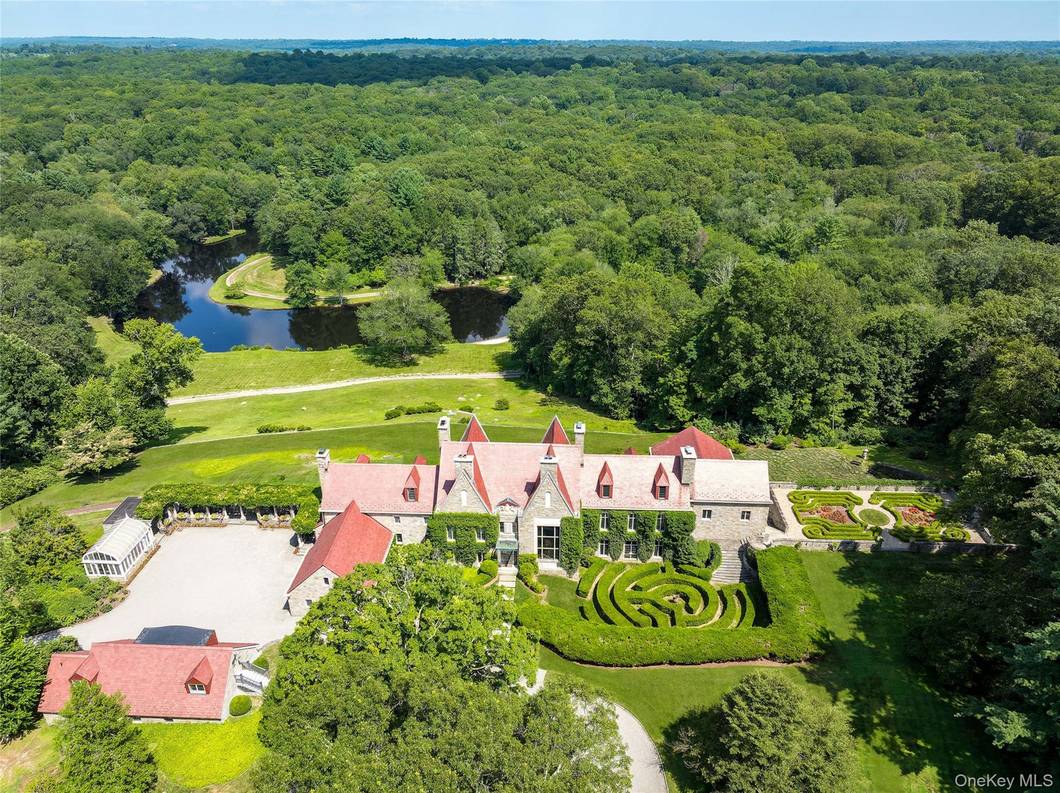
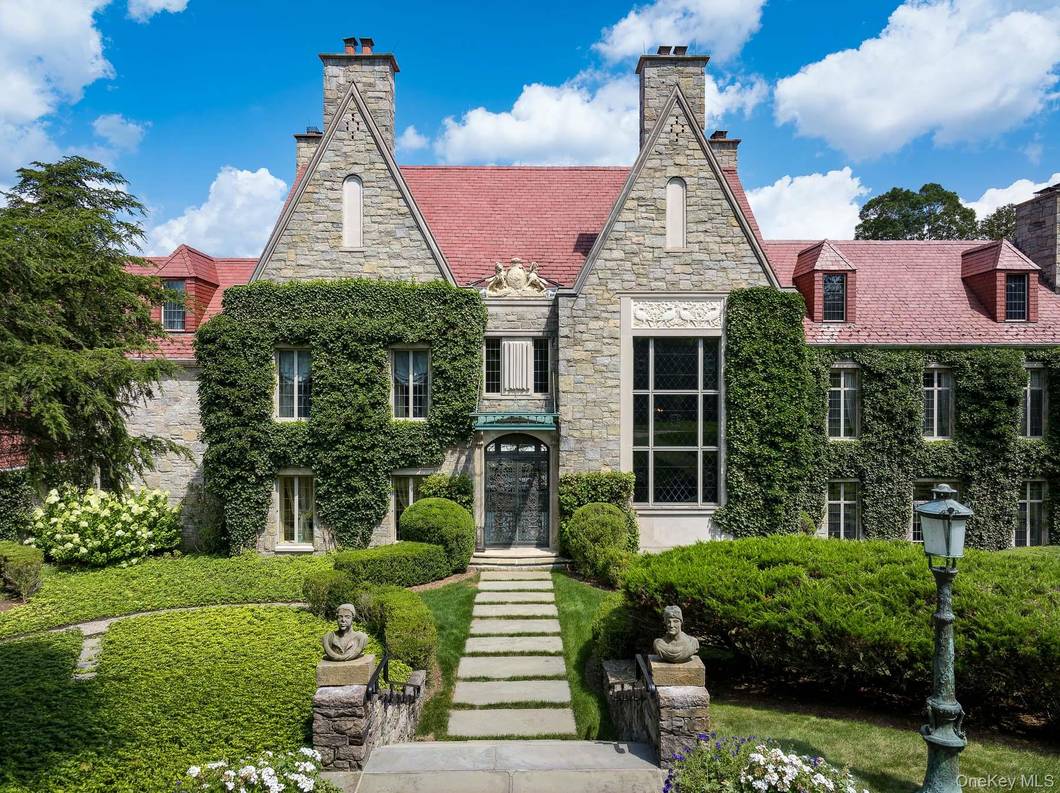
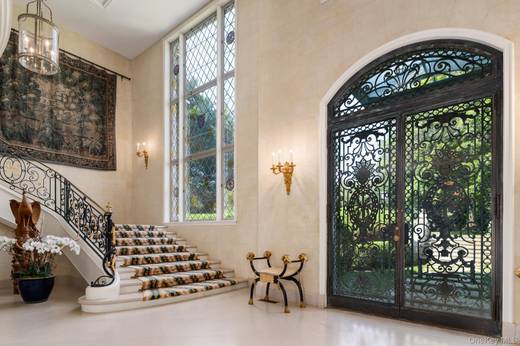
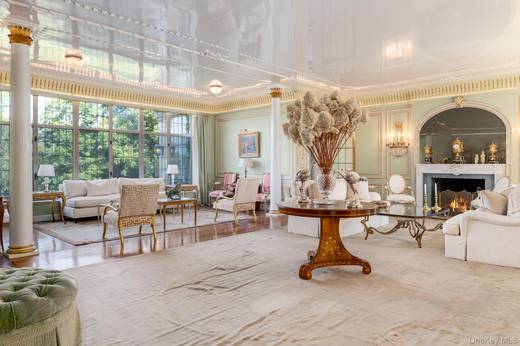
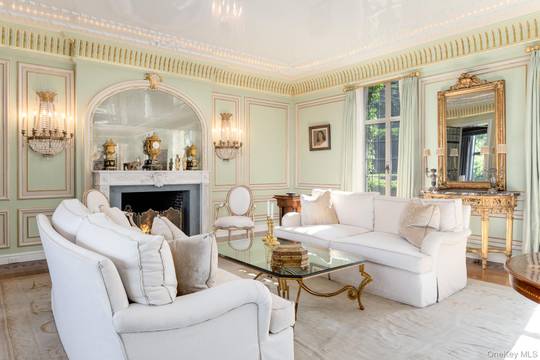
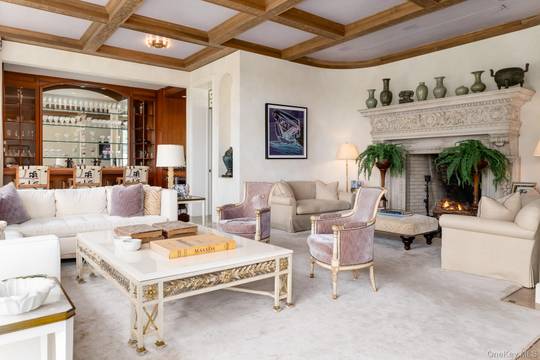
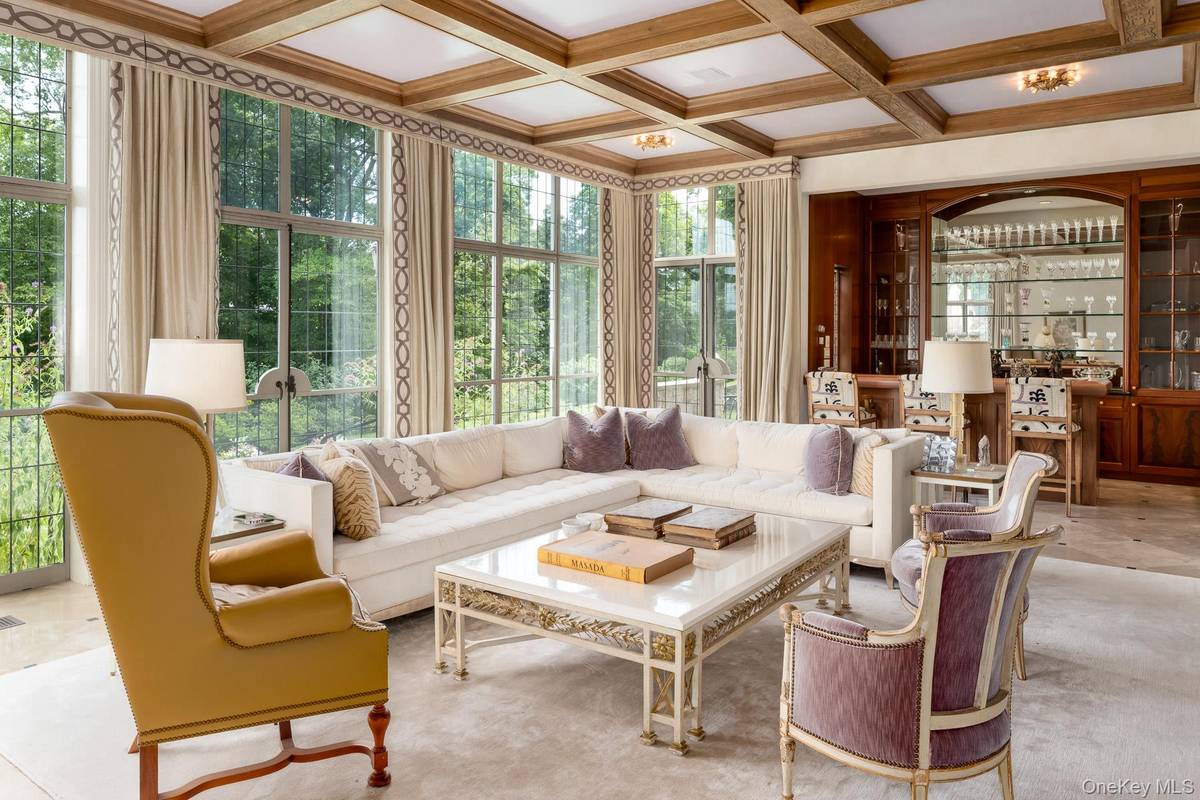
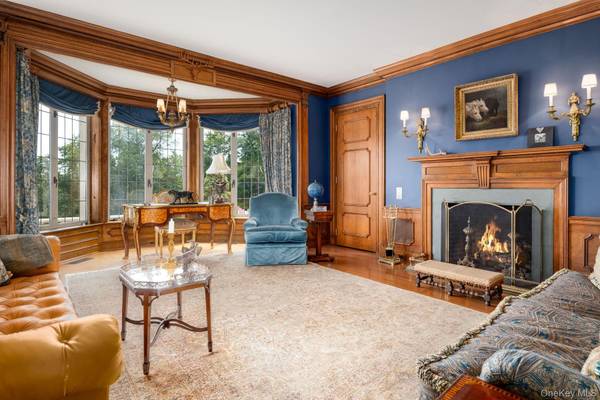
An extraordinary 268-acre legacy property spanning the New York and Connecticut border, Hillandale offers unparalleled privacy and timeless grandeur. Formerly the estate of the Sulzberger family of the New York Times, the European-inspired manor with over 15,000 sq ft and eight bedrooms has been meticulously restored and features magnificent formal rooms for entertaining, 11 fireplaces, two elevators, a paneled library, sun-drenched conservatory, billiard room, sauna, gym, and an Olympic-sized indoor pool with a spa.
There is also an outdoor pool with a dedicated pool house. Vast, beautifully landscaped grounds showcase formal gardens, a private lake, wooded trails, a hedge maze, and a lighted tennis court. Four separate guest houses and a separate garage apartment on the property create a truly incomparable private compound. This is a once-in-a-generation offering for those seeking exceptional elegance and seclusion.
Subtype:
Single-family residence | Year Built: 1900
Honest Analysis
It is an iconic and extremely rare asset, but with strong liquidity risk and a likely overprice compared to the local market; viability depends on usage strategy (family, hotel / retreat, events, equestrian, wellness) more than "standard" residential appreciation.
The property is located at 1233 Rock Rimmon Road, in Stamford, Connecticut, on the border between Connecticut and New York. The current asking price is 75 million dollars. The main house has approximately 15,944 square feet of built area, with eight bedrooms and twelve bathrooms. The total land is approximately 268.2 acres, divided between the two states, with several tax lots. The infrastructure includes an Olympic indoor pool, outdoor pool, spa, sauna, gym, lighted tennis court, trails, private lake, hedge maze, greenhouses, two stables, four guest houses, and an apartment over the garage, in addition to eleven fireplaces and two elevators. It is a historic mansion from the early 1900s, formerly owned by the Sulzberger family, fully restored, with over 30 million dollars invested in improvements and expansion, with the main house having practically doubled in size.
The property was previously listed in 2020 for approximately 49.5 million dollars and was not sold; it returned to the market in 2026 for 75 million, an increase of over 50% without any record of a transaction in that interval. This clearly indicates positioning as a "trophy asset," with a trophy price, and not as a product aligned with local residential market value.
For an investor, the return is unlikely to come from a quick resale to a typical residential buyer. The thesis must be the repositioning of the asset as a business. Some possible paths: an ultra-luxury retreat or boutique resort (wellness, high-end weddings, exclusive corporate events, executive retreats), taking advantage of the guest houses and the indoor pool for year-round operation; an equestrian center combined with events, exploring stables, trails, and the large rural area; a very high-standard private members club, in a country club model with few members and a high initiation fee, enjoying pools, tennis, spa, and lake; or even a thesis of future division into multiple high-end residential lots, transforming part of the 268 acres into a set of mansions, which would depend on urban viability and municipal approvals and would reduce the unique historical character of the ensemble.
Even in these scenarios, the expected return is not trivial. Ultra-luxury hotels and resorts in the NY/CT region tend to operate with low gross cap rates, somewhere around 2% to 4%, and the operating costs of an asset of this size—taxes, permanent maintenance staff, security, energy for heated pools, conservation of formal gardens, internal roads, and structures—consume a good part of the revenue. In strictly financial investment terms, it is difficult to project an internal rate of return higher than 4% to 6% per year, unless one can buy at a significant discount relative to the asking price and operate with extremely high average daily rates and occupancy.
The main risks are clear. First, liquidity: it is a "legacy estate" with a very restricted global target audience, which has already been offered to the market for years without a buyer, including a previous attempt at a lower price. Second, relative overpricing: the gap between 75 million dollars and the normal ceiling of the Stamford market, where top-of-the-line houses are in the 7 to 9 million range, is enormous; this increases the probability that a future buyer will also demand a very strong discount. Third, high fixed costs: property taxes alone are already at a six-figure level per year, not counting the part of the land located in New York, in addition to staff payroll, insurance, and intensive maintenance of the structures. Fourth, dependence on a specific niche: any model—resort, club, or retreat—will require brand building, international marketing, and highly qualified professional/hotel management to reach a revenue level compatible with the tied-up capital. Finally, there is regulatory and approval risk if the thesis involves land subdivision and development of multiple residential lots in two different states.
Comparing qualitatively with the Stamford market, the discrepancy is large. While the property under analysis asks for 75 million dollars, the median for luxury homes in Stamford revolves around just over 1 million, with top properties around 8 to 9 million. The built area of the main house, nearly 16,000 square feet, is double or more that of many local high-end homes, which typically range between 4,000 and 8,000 square feet. The 268-acre land exceeds the standard 1 to 5-acre lot of luxury residences in the region by dozens of times. Consequently, the price per square foot at Hillandale is several times higher than the average price per square foot of existing luxury homes in the city. Furthermore, while conventional high-end properties tend to be absorbed by the market within a few months of exposure, this property has already demonstrated a history of remaining on offer for a long time without a transaction.
Thus, as a purely financial investment bought at the current full price, the property is weak: low liquidity, probability of a low cap rate, very high annual costs, and a concrete risk of resale only with a relevant discount. As a strategic asset for repositioning—whether as a luxury resort, private club, or corporate retreat—it may make sense, but only if you can: buy at a substantial discount relative to the 75 million (ideally closer to or below the historical 49.5 million range); have an operating partner with proven experience in this niche; and structure a business plan in which the projected revenue, after new adaptation capex, allows for pursuing a more aggressive target IRR in the 8% to 10% per year range.