Homes for sale in Valhalla
New York, USA
About Valhalla
Where Valhalla is
Valhalla is a hamlet in the Town of Mount Pleasant, Westchester County, New York, north of the city and west of the Bronx River. The listings in this portfolio put it at under an hour from New York City by road, and minutes from the Metro-North station — which is the connection that actually counts.
It is a small place with two large things inside it. The first is the hospital and university complex — the county medical centre and the medical college — which makes Valhalla a place of work rather than merely a dormitory. The second is the Kensico dam and the reservoir it holds, which occupy much of the territory to the north and give the hamlet its most recognisable image. Add the land taken by several of the county's largest cemeteries, and a structural feature becomes clear: there is little land left to build on, which is why the residential supply is small and turns over slowly.
What is for sale today
The portfolio runs from roughly $740,000 to $1,355,000, and most of it sits above the million mark. These are single-family homes between about 119 and 304 square metres, on lots ranging from an eighth of an acre to a little over an acre, built between the late 1920s and the early 1970s. And there is one exception that is not really a house: the most expensive property in the portfolio is sold mainly for its land.
What is in the portfolio
At the top by value, a property that is not bought to move into as it stands: a two-bedroom house of just over 110 m² and, with it, four separately deeded lots across about 1.2 acres, with R10 zoning, an updated topographic survey and a conceptual layout for three new homes that keeps the existing residence. It is a development deal with a house inside it, not the other way round.
Next, a ranch of about 304 m² from 1952, on a corner lot just under an acre: a living room with hardwood floors and a fireplace, opening into a second living room, a granite kitchen, a primary suite with walk-in closet and private deck, and a finished walk-out lower level with a full bathroom, a flex room and a summer kitchen. In the garden, an in-ground pool. There are notes on both of those further down.
Then a raised ranch of about 269 m² from 1971, custom-built by the original owners: cathedral ceilings in the living and dining areas, Brazilian rosewood flooring, an updated kitchen with granite counters, and a lower level with a family room and wood-burning fireplace, two bedrooms and a half bath. In the garage, two oil tanks, a three-zone boiler and whole-house water filtration. A little over three kilometres from the station.
At the entry price, a 1928 colonial of about 119 m² on a lot of just over 500 m²: a front porch, hardwood floors, three bedrooms upstairs, a powder room on the ground floor and a fully fenced back garden. Natural gas heating — and window units instead of central air.
What the prices say
There is nearly a factor of two between entry and top, but the distance is not explained by the type of house: it is explained by finished area and land. The cheapest house is also the oldest and the smallest, on an eighth of an acre; the most expensive is not paid for as a house, it is paid for as parcels. In between sit large post-war houses on comparable lots, and there what separates prices is condition and how much of the lower level is finished and permitted.
One market signal is worth reading: the move-in-ready homes listed most recently had been about three weeks on the market, while the development property has been listed for four months and has already cut its price. Land does not turn over at the pace of a finished house, here as almost everywhere.
Points to watch
The school district changes within the same hamlet
This is the most important point on this page and the least obvious. The properties in this portfolio do not all belong to the same school district: some are Valhalla and others are Mount Pleasant. In the United States the school district is one of the heaviest variables in resale value and it is the largest share of the property tax bill — and the boundary matches neither the name of the hamlet nor the ZIP code. Confirm the district by the exact address, every time, before comparing two properties that look alike.
Second kitchen and a lower level with its own entrance
One of the houses describes a finished lower level with a walk-out, a full bathroom, a flex room and a second kitchen. In practice that comes close to a second dwelling unit, and what makes it legal is a municipal permit with conditions and renewal — not the presence of the fixtures. Ask for the permit and the certificate of occupancy before counting on that space to house family or to rent out. And confirm whether that area counts in the stated square footage: finished basement space is only living area with adequate ceiling height, an egress window and a permit, and the difference changes the price-per-square-metre comparison between two homes.
Oil heating and the tank
Oil is the dominant fuel in the larger houses in this portfolio, and in one of them the two tanks are in plain sight inside the garage — which is the good situation, because a visible tank can be inspected. The question that remains, and it is asked of any house here with oil heat, is whether there was ever a buried tank on the property and whether there is a record of its removal. A buried tank that has leaked is a soil contamination problem that stays with the owner, not with the seller.
An in-ground pool enters the assessment
One of the houses has an in-ground pool. Unlike an above-ground pool, which is equipment, an in-ground pool is an improvement: it enters the property assessment and therefore the tax bill, it carries its own fencing and insurance requirements, and the cost of maintaining it — or removing it — is not the same. Ask for the maintenance history and the date of the last liner and equipment replacement.
Central air is not a given
Some of the houses have central air and some have window units. In a house from the 1920s, moving to central air is not just buying the machine: it is finding room for ductwork in a structure that was not built with it in mind, or accepting a ductless system with visible units. It is a cost to be worked out before making an offer, not after.
The tax, and the number that does not compare
In this county the property tax is high and the largest share of it is the school tax. Across the properties in this portfolio, the effective rate measured against the asking price runs between roughly 1.5% and 1.9% a year — on a million-dollar house that is close to $1,400 a month, every month, on top of the mortgage payment.
And there is an exception that misleads anyone comparing in a hurry: the four-lot property publishes a tax figure well below that band. That is consistent with the parcels having separate deeds, but it cannot be assumed that the figure covers the whole. Ask for the bill on each lot, not just one.
Buying land is not buying approval
The conceptual layout for three homes is exactly that — a concept. R10 zoning, a topographic survey and conceptual plans are starting points, not approvals. Before paying for development potential, confirm what the municipality will actually permit on those specific parcels, what fees and bonds it requires, and whether connecting the infrastructure is an administrative matter or a construction job. The listing itself says as much in other words, when it directs the buyer to their own due diligence.
The reservoir is drinking water
Reservoir views add value, and the dam plaza is a public space used all year round. But the Kensico is part of the system that supplies New York City: it is not a recreational lake, access to the water is restricted, and being in a watershed brings its own rules for building and for sewage. It is a genuine scenic advantage, provided you know what it is.
Who it suits — and who it does not
It suits people who work at the hospital and university complex, which is right here, and people who commute into the city — Valhalla has a station on the electrified line and the ride is direct, which at this distance is not common. It suits buyers who want a single-family house with a garden in a small, stable place, and buyers with the appetite and the capital for small-scale residential development, because that opportunity exists here and is rare.
It does not suit buyers looking for variety: supply is small, homogeneous and slow to turn over. It does not suit buyers who want a recent house, because nothing in this portfolio was built in the last five decades. And it does not suit anyone buying at the limit of their budget, with an effective tax rate close to two per cent on top of the mortgage payment and housing stock of the age it is.
Before making an offer
- Confirm the school district by the exact address — it changes within the hamlet.
- Confirm whether the finished lower level is included in the square footage and whether it is permitted.
- Confirm how many bedrooms are legal, not how many are used as such.
- Ask for the permit and certificate of occupancy for any second kitchen.
- Ask whether there was ever a buried oil tank and request the removal record.
- Ask for the itemised tax bill and three to five years of history — and, where there is more than one lot, the bill for each.
- Ask for the pool maintenance history, where there is a pool.
- Work out the cost of installing central air where there is none.
- Confirm with the municipality what is actually approvable, before paying for development potential.
- Check the rules that apply because the parcel sits in a watershed, if there is any intention to extend.
Closing thoughts
Valhalla is small for reasons that are not going to change: between the reservoir, the hospital complex and the cemeteries, there is not much left to build on. That makes it stable and contested at the same time — few houses, good connections, steady demand. The points above do not disqualify it; they are what produces that balance. What matters is going in knowing that this is a tight market, with housing stock measured in decades, and with the right questions asked beforehand rather than after.
When you get in touch through a property page, we forward your enquiry to the consultant responsible for that listing.
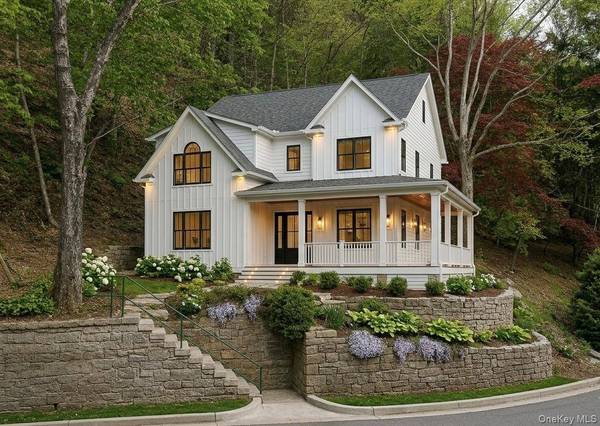
Home and Four Separately Deeded Lots for Sale in Valhalla - New York - USA
2 bed • 111.48 m²
$1,355,000
View property →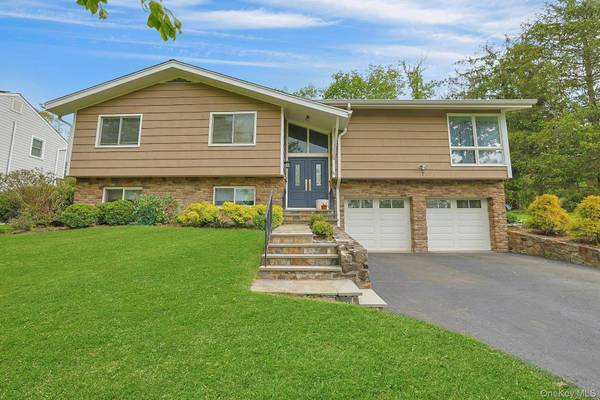
5 Bedroom Home for Sale in Valhalla - New York - USA
5 bed • 3 bath • 269.42 m²
$1,255,000
View property →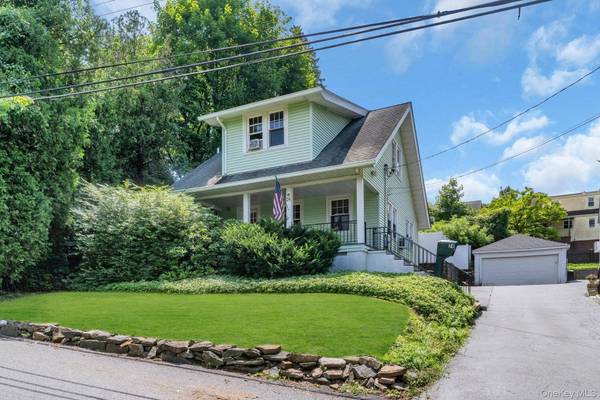
3 Bedroom Home for Sale in Valhalla - New York - USA
3 bed • 2 bath • 119.1 m²
$740,000
View property →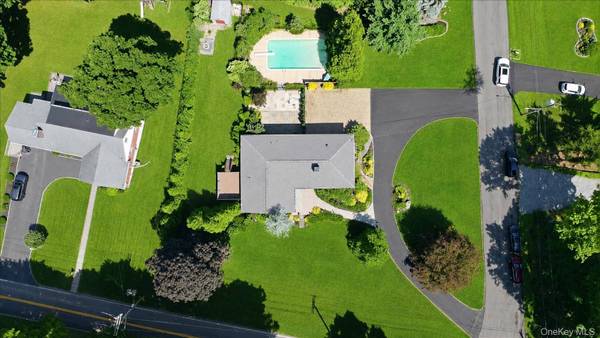
4 Bedroom Home for Sale in Valhalla - New York - USA
4 bed • 3 bath • 303.7 m²
$1,275,000
View property →