Homes for sale in Groveland
Florida, USA
About Groveland
Groveland is a city in Lake County, in Central Florida, about 50 km west of Orlando and a few minutes from Clermont. For almost a century it was a small town of sawmills, turpentine and orange groves; in recent years it has become one of the fastest-growing cities in one of the fastest-growing counties in the state, with neighborhoods of new homes springing up around the old downtown and the lakes.
For buyers, Groveland offers new single-family homes, with a garage and a backyard, at lower prices than in Clermont, Winter Garden or the Orlando area, with State Road 50 and Florida's Turnpike close by. The trade-off lies in the property tax for those without a homestead exemption, in home insurance, which is expensive in Florida, in the fees of the homeowners associations and of the Community Development Districts in the new neighborhoods, in hurricanes and in the sinkhole risk typical of Central Florida. This page explains the city, what is for sale and what is worth checking before you buy.
Where it is and how to get there
Groveland lies in the south of Lake County, between Mascotte to the west and Clermont to the east, about 8 km away. State Road 50 crosses the city from east to west and links it to Clermont, Winter Garden and Orlando; State Road 19 and State Road 33 run north and south. Florida's Turnpike, the toll highway that connects the center of the state to Miami and to the north, has an interchange a few minutes away, on the Clermont side, and it is the quickest way to reach the Orlando area. Downtown Orlando and the theme parks are about 40 minutes to an hour away by car, depending on traffic.
There is no airport in the city. International flights go through Orlando International Airport, a little over an hour away. Nor is there passenger rail service or any bus service that is useful for everyday life: in Groveland, as in almost all of Central Florida, life is lived by car.
A bit of history
Groveland was born at the end of the 19th century around timber and turpentine: it was first called Taylorville and, at its peak, had one of the largest sawmills in the southeastern United States. The town was incorporated in 1922. When the pine forests ran out, the orange groves came, and for decades the life of the city followed that of Lake County's citrus industry.
The name Groveland also became tied to one of the darkest cases in the justice system of the American South. In 1949, four young Black men, known as the Groveland Four, were falsely accused of rape: one was killed by an armed mob before the trial, another was shot dead by the sheriff, and the other two spent years in prison. They were pardoned by the state of Florida in 2019 and formally exonerated in 2021, more than seventy years later. The city today acknowledges this history, which is part of any honest presentation of Groveland.
Over the last two decades, the city has changed in scale. In the 2020 census, Groveland had 18,505 residents, almost double the figure of ten years earlier, and it keeps growing with new neighborhoods. In 2023, it became the first city in Florida certified as a dark-sky community (International Dark Sky Community), with its own rules for outdoor lighting.
Groveland, area by area
The old downtown and the lakes
Around the intersection of State Road 50 and State Road 19 lies the historic downtown, with the municipal services, older homes on small lots and lakes such as Lake David, with its park. It is the cheapest area for those willing to take on a home that needs renovation. The city has plans for the downtown: a new alignment of State Road 50, which will divert heavy traffic away from the central streets, and a mixed-use project with housing, retail and public spaces.
The new neighborhoods
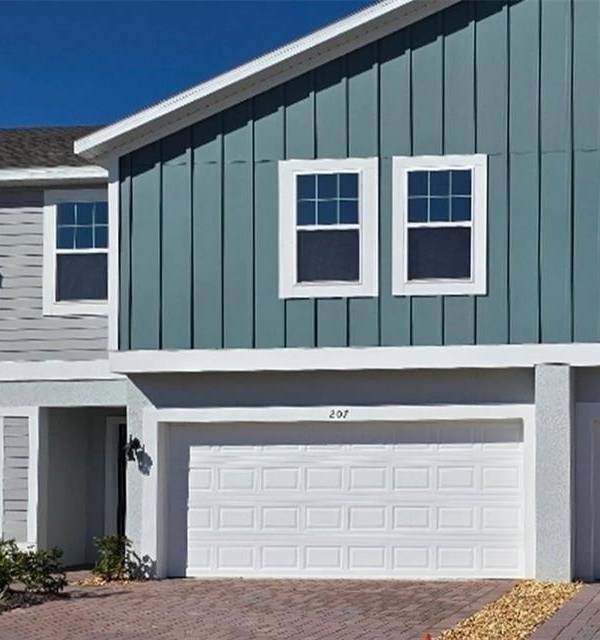
To the east, toward Clermont, and along the roads leading out of the center, subdivisions of new homes by national and regional builders have multiplied, many with a community pool and a homeowners association. They are single-story and two-story homes, with three to five bedrooms, and townhomes on compact lots. This is where most of the new construction is concentrated and where most of the families arriving in the city settle.
The 55+ communities
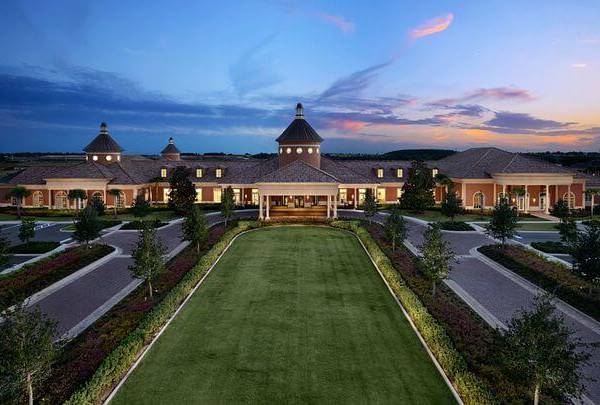
Groveland also has 55+ gated communities, with a clubhouse, pools, pickleball and tennis courts and their own social calendar. Trilogy Orlando, despite its name, is in Groveland: built between 2005 and 2022, it is now a resale market, with a large clubhouse at its center. In these communities, the rules and the fees are more demanding, and the residents' age is a condition for buying and for renting.
The rural outskirts
Beyond the new neighborhoods, there is still large acreage, pastureland and old orange groves, especially to the west and south. For those looking for space and peace and quiet, there are homes on lots of one acre or more, but also greater distance from everything and, in some cases, a well and septic system instead of public utilities.
Health, schools and services
Public schools belong to the Lake County school district; the high school that serves the city is South Lake High School, in Groveland. In the United States, the assigned school depends on the exact address and should always be confirmed before buying. The nearest hospital is Orlando Health South Lake Hospital, in Clermont, about ten to fifteen minutes away by car, with a 24-hour emergency room. Everyday shopping is done along State Road 50, in Groveland and in Clermont, where there are more supermarkets, restaurants and shopping centers. For leisure, there is the Clermont chain of lakes, bike trails, golf courses and, about an hour away, the Orlando theme parks.
What is for sale
What sells in Groveland is mostly new-construction single-family homes and townhomes in the builders' subdivisions, homes from the 1990s and 2000s in established neighborhoods, older homes downtown and, on the outskirts, homes on large lots. In our selection, prices range from about US$312,000 to US$340,000: a new four-bedroom townhome in a neighborhood without a Community Development District and a three-bedroom home in a 55+ gated community.
What drives the price is the age and condition of the home, the living area, the lot, proximity to a lake, the assigned school, the distance to State Road 50 and the Turnpike, and the homeowners association fees. In new construction, always compare the base price with the final price, after options and lot premiums, and check whether the builder offers incentives toward the mortgage or the closing costs.
For those buying to rent out, demand comes mainly from families who work in the Clermont and Orlando area and from people moving to Lake County. It is a long-term rental market, with annual leases, and the rent must also cover the tax, the insurance and the fees, which are paid by the owner.
The market moves. A listing seen a month ago may now have a different price or may no longer be available: always confirm the current status and price before moving forward.
Points to consider
Hurricanes and flooding
Groveland is far from the sea, but not out of the path of hurricanes. In 2022, Hurricane Ian and, in 2024, Hurricane Milton crossed Central Florida with strong winds and heavy rain, and there was flooding in several parts of Lake County. Check the flood zone of the address on the FEMA maps, especially near the lakes and on low-lying land, and ask whether the home has ever had water inside.
Home insurance
Homeowners insurance in Florida is among the most expensive in the United States, and flood insurance is separate. Ask for a quote for that specific home before running the numbers: the age of the roof and its wind resistance change the price a great deal.
Sinkholes
Central Florida, including Lake County, sits on limestone and is one of the areas of the state most prone to sinkholes. The law requires insurance to cover catastrophic ground cover collapse, but that coverage applies only to extreme cases; sinkhole coverage is optional and comes at a cost. Ask the seller for the claims history and, if in doubt, for a ground assessment.
Taxes, associations and Community Development Districts
In 2025, the Groveland city millage rate is 5.7 per thousand of taxable value, to which those of the county, the schools and other districts are added. In the new neighborhoods, there is also the homeowners association fee and, in many cases, the assessment of a Community Development District (CDD), which comes on the tax bill and can weigh heavily. Ask for all three figures for that specific home.
And do not run the numbers using the seller's tax bill. In Florida, the taxable value of a home that is a primary residence can rise only 3% per year, or the rate of inflation if lower, and that of a home that is not can rise at most 10% per year, excluding school taxes. When the home changes hands, that cap ends: on January 1 following the purchase, the home is reassessed at market value. On a new home, the first tax bill may be based on the land without the house, and the next one rises sharply.
Rapid growth and construction
A city that nearly doubles in a decade lives under construction: roads being widened, new intersections, schools and services racing to keep up with the population. The new alignment of State Road 50 will bring years of construction to the downtown. Before buying, find out what has been approved around the lot — the empty land next to the house may be the next subdivision.
Renting
Groveland is not a vacation-home area like the area around Disney. The rental that works here is the long-term one, to families. Before buying with renting in mind, read the homeowners association rules, which often restrict short-term rental or impose minimum lease terms; in 55+ communities, the tenant must also meet the age rule.
The car and traffic
With no public transportation serving everyday life, plan on one car per adult. State Road 50 between Groveland, Clermont and Winter Garden has heavy traffic at rush hour; drive the commute to work at the time you would actually make it before deciding.
Legal and tax checklist, in the United States
Before buying: the property tax bill, the association fees and the CDD assessment; the FEMA flood zone; a quote for homeowners insurance and, if applicable, flood insurance; an independent home inspection, including in new construction; sinkhole history; confirmation of the school assigned to the address; in 55+ communities, the age and rental rules.
At purchase: in Florida, closing is usually handled through a title company or an attorney, with title insurance. Closing costs and documentary stamp taxes on the deed and the mortgage must be factored in. Buyers from abroad need an American tax identification number to report income and, at closing, the bank and the title company ask for proof of the source of funds.
While you own: property tax paid to the county; the homestead exemption applies only to those who live in the home as their primary residence. Florida has no state income tax, but rental income must be reported to the federal tax authorities, even by non-residents.
On sale: capital gains tax. Those who are not residents of the United States are subject to FIRPTA withholding at closing, which is an advance on the tax and not the final tax. It is wise to speak with an American accountant before selling.
Groveland and the nearby alternatives
Clermont
Clermont, to the east, is the reference city of southern Lake County: more retail, the hospital, the chain of lakes and the hills sought out by cyclists and runners. Prices are generally higher. Those who want the same region with new homes at a lower price look to Groveland.
Minneola and Mascotte
Minneola, north of Clermont, has new neighborhoods and direct access to the Turnpike; Mascotte, west of Groveland, is smaller and more rural, with generally lower prices and a longer distance to Orlando. Among the three, the choice is made home by home, comparing the price with the fees, the CDD and the commute time to work.
The Orlando side
Winter Garden, Windermere and the Horizon West area are closer to Orlando and its jobs, with highly sought-after schools, and prices reflect that proximity. For many families, Groveland is the way to own a new home in Central Florida while paying less, at the cost of more time on the road.
Who it makes sense for — and who it does not
It makes sense for families who want a new, spacious home at a lower price than in the Orlando area, for those who work in Clermont or along State Road 50 and the Turnpike, for those looking for a 55+ community with a clubhouse and activities, and for those looking for a home to rent out long-term in a growing area.
It makes less sense for those who want a vacation home to rent by the week, for those who need to be in downtown Orlando every day, for those who want to live on foot, and for those who run the numbers without including insurance, property tax and the fees of the new neighborhoods.
Final thoughts
Groveland is Central Florida in full growth: new homes, lakes and dark skies, next to Clermont and less than an hour from Orlando. What separates a good purchase from a bad one is the full cost of that specific home — tax, insurance, association and CDD —, the flood zone, the condition of the land and of the construction, what has been approved nearby and the real commute to work.
When you contact us through a property page, we forward your details to our partner broker, who has the complete information on that specific property — tax bill, association fees and CDD assessment, flood zone, insurance and negotiation terms.