Homes for sale in Elmsford
New York, USA
About Elmsford
Where Elmsford is
Elmsford is a village in Westchester County, New York State, at the crossing of roads linking the inland county to the Hudson River. It is the most urban and the most traffic-crossed of the places around here — and it is also the only one of them with no railway station of its own.
The listings themselves say so in their own way: they speak of being near the Harlem Line and of White Plains and Tarrytown being minutes away, which in practice means you catch the train somewhere else. That has consequences in cost and time, set out in the first point below.
What is for sale today
The portfolio runs from roughly 475,000 to 1,499,000 dollars, with the middle of the range near 785,000. Sizes run from about 121 to about 393 square metres, on lots from around a ninth of an acre to over an acre.
They are all single-family houses — there are no apartments and no co-ops here — and the stock splits into two extremes with almost nothing in between: houses from the turn of the twentieth century, and houses built in the last few years.
What is in the portfolio
At the top, a house from 1893 on over an acre, with five bedrooms and six bathrooms — the largest and the oldest in the portfolio, and the only one that falls in the Greenburgh Central school district.
Next, houses from the 1950s, of about 145 to 195 square metres, with a finished basement and a full bathroom in at least one of them.
Then recent construction, from 2017 and 2020, heated by natural gas and by electricity — the only ones in the portfolio that do not call for the questions you ask of a house with decades behind it.
At the entry price, a house from 1900 sold as is, sitting on a busy through road, with easy access to the county medical centre and to White Plains.
What the prices say
There is a little over a factor of three between entry and top, and the distance is explained mostly by land and age: the dearest house is the oldest and sits on over an acre, while the rest occupy small parcels.
There is no station-proximity premium here ordering the prices as it does in the neighbouring hamlets — because there is no station. What orders prices in Elmsford is the lot, the condition and the street the house sits on, and that last one weighs more here than elsewhere, for the reason set out below.
Points to watch
There is no station in Elmsford
This is the structural difference from Pleasantville, Thornwood, Hawthorne or Valhalla, which all have a station inside the place. Here, anyone commuting into the city has to reach another station first — the listings point to White Plains and Tarrytown.
In practice that adds three things to the journey: the time to the station, the cost of a parking permit (which usually carries a waiting list and an annual fee) and dependence on a car or a bus in a village with traffic. Before deciding, make the real journey at the hour you would be catching the train, and ask what a permit costs and how long the wait is.
The tax varies sixfold between two houses in the same village
This is the most important point on this page and the easiest to misread. Across the properties in this portfolio, the effective tax rate measured against the asking price runs from about 0.49% to 2.90% a year. That is not an error: it is the same village.
⚠ The 0.49% figure belongs to a house built in 2020, and a tax that far below normal on recent construction usually means an assessment that does not yet reflect the finished house. It should not be assumed that this figure holds. Ask the town for the current assessment and whether a reassessment is scheduled — the difference between 0.49% and 2% on 550,000 dollars is over 650 dollars a month.
And at the other end, 2.90% on a 475,000-dollar house is about 1,150 dollars a month in tax alone. Here, more than in any of the neighbouring hamlets, the tax has to go into the calculation before you compare two prices.
There are two school districts
The properties in this portfolio do not all belong to the same school district: most are Elmsford, and at least one is Greenburgh Central. In the United States the school district is one of the heaviest variables in resale value and it is the largest share of the property tax bill — and the boundary follows neither the name of the village nor the ZIP code.
Confirm the district by the exact address, every time. In Elmsford this counts double, because it compounds with the spread in tax described above.
The street matters more here than in the neighbouring places
Elmsford is crossed by connecting roads with serious traffic, and one of the houses in this portfolio sits on one of them. A house on an artery and a house on a residential street can carry the same price per square metre and not be worth the same: the noise differs, the safety of pulling in and out differs, and so does the ease of reselling.
It is worth visiting the house at rush hour, and not in the middle of a Saturday morning.
Buying as is is not a discount
The cheapest house in the portfolio, from 1900, is sold as is. That means the seller will make no repairs and will answer for no defects — it is a warning, not a bargain.
Buying that way means inspecting before signing, and more deeply than usual: structure, roof, electrical service, plumbing, damp and asbestos in a building over a century old. And it means pricing the works before deciding the offer, not afterwards.
Heating follows no pattern in this village
Unlike Thornwood, where oil dominates, here every house heats its own way: there is natural gas, there is electricity, there is propane, and there are combinations of two fuels in the same house. That means the monthly cost of heating varies widely between properties of the same size.
Ask for twelve months of energy bills — it is the only figure that truly answers this. And where there is oil or propane, ask where the tank is, whether it is above ground, and whether there was ever a buried tank on the property.
The stock is at two extremes with no middle
The portfolio holds houses from the turn of the twentieth century and houses from the last few years, and almost nothing between the two. Those are two markets with different questions: in an 1893 or 1900 house you ask about structure, insulation, electrics and plumbing; in a 2017 or 2020 house you ask about the warranty, the builder and — as we have seen — the tax assessment still to settle.
Comparing the two on price per square metre, and nothing else, tells you nothing useful.
Who it suits — and who it does not
It suits people working in White Plains or at the county medical centre who want to be close without paying White Plains prices. It suits buyers who want a house with land at a figure that no longer exists in the places with a station. And it suits buyers who prefer recent construction, because here that exists and next door it barely does.
It does not suit anyone who depends on the train every day and does not want to add the drive to another station. It does not suit buyers who want an apartment — there are none in this portfolio. It does not suit buyers who will not visit the street at rush hour. And above all it does not suit anyone who reads the published tax as though it were the future tax.
Before making an offer
- Make the real journey to the railway station at the hour you would travel, and ask about parking: cost and waiting list.
- Ask the town for the current tax assessment and whether a reassessment is scheduled.
- On a recent house, do not assume the published tax holds — ask for an estimate for the finished house.
- Confirm the school district by the exact address, which here is not the same across the village.
- Visit the house at rush hour, especially if it sits on a connecting road.
- On the property sold as is, carry out an extended inspection and price the works before offering.
- Ask for twelve months of energy bills.
- Where there is oil or propane, ask where the tank is and whether there was ever a buried one.
- On the turn-of-the-century houses, ask about structure, insulation, electrical service and plumbing.
- Ask for the itemised tax bill and three to five years of history.
Closing thoughts
Elmsford is the most practical and the least romantic of these places. It has no village centre with a station and no homogeneous historic stock; it has position, access and prices that reflect that. Buyers here are usually trading the walk to the train for more house, more land or less money.
What should not be traded away is a careful reading of the tax. In a village where the effective rate runs from half a per cent to nearly three, the figure on the listing is not enough for comparing one house with another — and it is the difference that, after ten years, weighs more than the purchase price.
When you get in touch through a property page, we forward your enquiry to the consultant responsible for that listing.
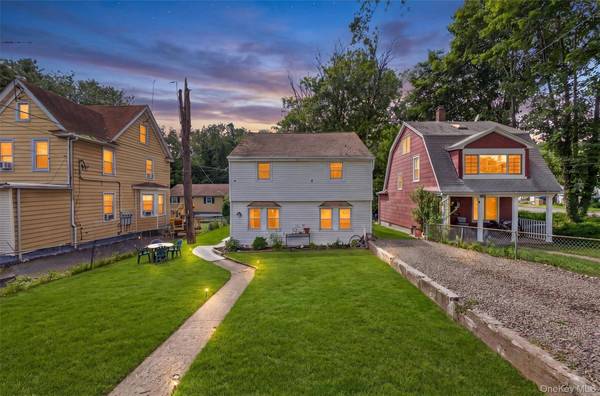
3 Bedroom Home for Sale in Elmsford - New York - USA
3 bed • 120.77 m²
$475,000
View property →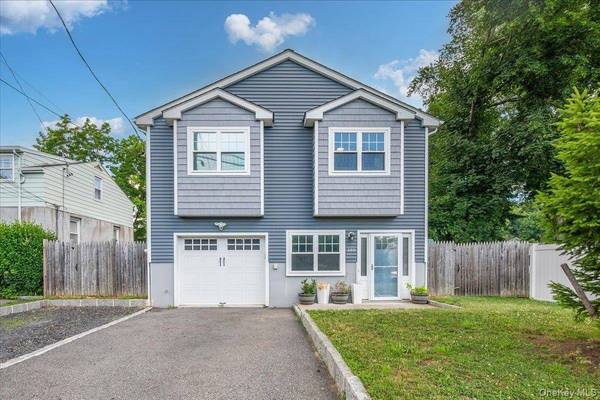
4 Bedroom Home for Sale in Elmsford - New York - USA
4 bed • 3 bath • 181.16 m²
$785,000
View property →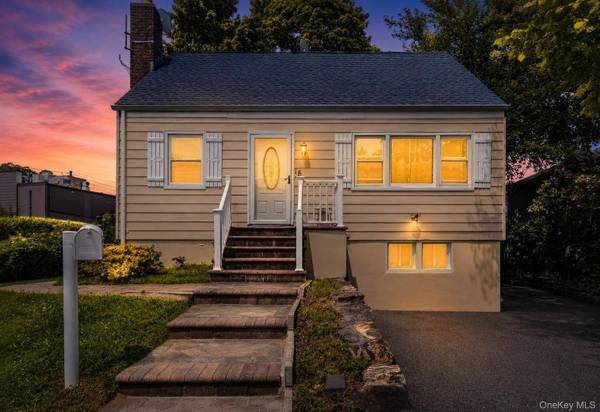
3 Bedroom Home for Sale in Elmsford - New York - USA
3 bed • 3 bath • 139.35 m²
$599,000
View property →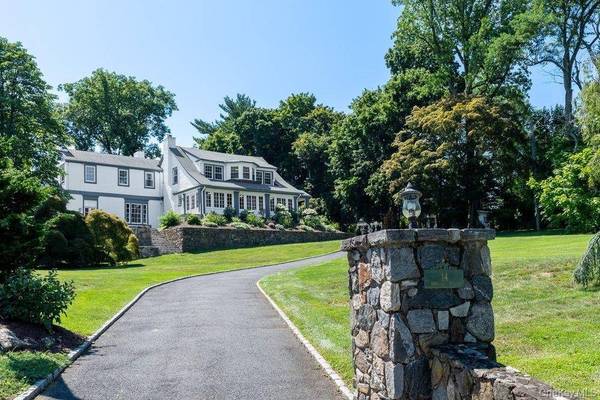
5 Bedroom Home for Sale in Elmsford - New York - USA
5 bed • 6 bath • 392.52 m²
$1,499,000
View property →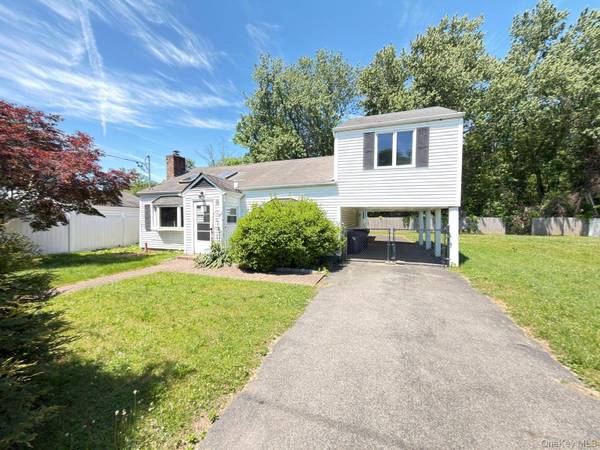
2 Bedroom Home for Sale in Elmsford - New York - USA
2 bed • 130.06 m²
$550,000
View property →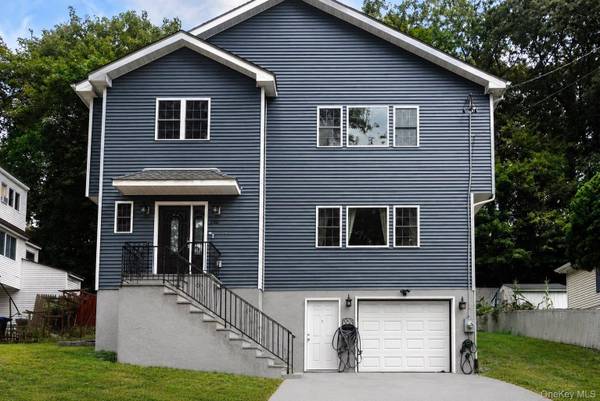
4 Bedroom Home for Sale in Elmsford - New York - USA
4 bed • 4 bath • 193.98 m²
$799,000
View property →