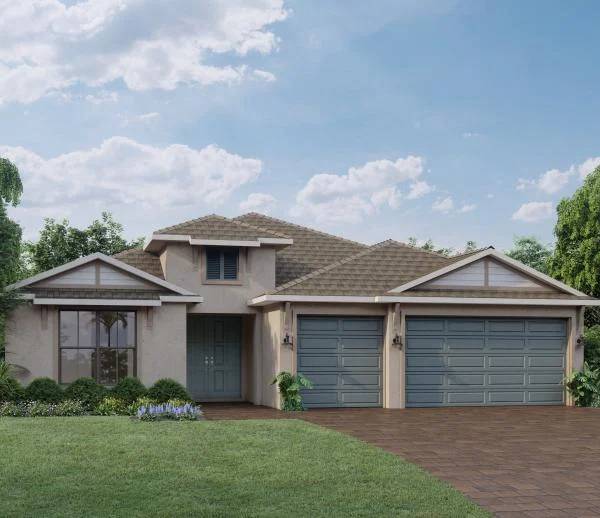
Homes for sale in Clearwater
Florida, USA
About Clearwater
Where Clearwater is
Clearwater is the seat of Pinellas County, on Florida's west coast — the Gulf Coast, facing the Gulf of Mexico — and part of the Tampa-St. Petersburg metropolitan area. It occupies a narrow peninsula between Tampa Bay to the east and the Gulf to the west, with its beach on a barrier island reached by bridge.
⚠ This needs saying immediately, because it is the most common confusion for buyers from abroad: Clearwater is not the Florida of the theme parks. Orlando is about two hours away on the I-4. Anyone looking for a house to rent to families on a theme-park holiday is looking at the Davenport and Kissimmee corridor, which is a different market, with a different product and a different demand. Here, life runs on the beach, on healthcare and on retirement.
Distance from the water decides everything — and not in the way it seems
This is the most useful thing that can be said about buying in Pinellas, and it does not appear in the listings: the difference between waterfront and six kilometres inland is not a question of the view. It is a question of insurance, flood zone and storm-surge exposure.
What we have on offer illustrates exactly those two extremes. One is an apartment in a seven-storey, eighty-unit tower on the shoreline, with terraces facing the Gulf. The other is a house in a gated community that the listing itself places 6.4 kilometres east of the beaches.
For a buyer, it reads like this. On the waterfront you pay the top premium per square metre and take on the maximum exposure: direct storm surge, more severe FEMA zones, flood insurance mandatory with a mortgage, and premiums that can make the sums impossible. Six kilometres inland the view disappears and the beach becomes a twelve-to-eighteen-minute drive — but storm-surge exposure drops sharply, the flood zone is usually more favourable, and insurance moves into another bracket.
There is no right answer between the two. There is a calculation that has to be done with real figures for the specific address, and done before the offer.
2024 ended Tampa Bay's statistical luck
For more than a century the region carried a reputation as a shelter: many hurricanes passed alongside, none of great intensity came in head-on. That fed the idea that Tampa Bay was somehow spared.
In 2024 that idea ended. Hurricane Helene drove severe storm surge along the Pinellas coast, with material damage on the barrier islands and in low-lying areas; weeks later, Milton came ashore with direct wind over the region. Three consequences follow for anyone buying today, and all three still stand:
- waterfront and low-lying houses took serious damage — some had to be elevated or rebuilt;
- houses further inland took wind and rain but not direct storm surge — the difference was material;
- the insurance market, already strained, got worse.
Anyone visiting today finds a rebuilt and attractive region. Anyone buying has to ask, for the specific property, whether it was damaged, whether it was repaired and whether any claims are open — and to ask for that property's claims history, not the neighbourhood's.
Insurance is the line that decides, and it is in no listing
In Pinellas, insurance has stopped being an incidental cost and frequently become the factor that determines whether a purchase is viable at all. Several carriers cut exposure or left the state, and a public insurer of last resort exists precisely because the private market does not cover everything.
There are three distinct covers and they should not be confused: homeowner's insurance, wind — often a separate policy in this region — and flood, which depends on the FEMA zone and is mandatory with a mortgage in the severe zones.
None of these figures should be estimated from a distance. Get a real quote for the exact address, before the offer. It is entirely possible that the policy, not the asking price, is what decides the purchase — and it is why the year of construction matters so much here: Florida's building code was strengthened after 2002, and houses built later perform better and are viewed differently by insurers.
What is for sale is a portrait of the market
On the waterfront, the product is the new tower apartment, with open layouts, wide terraces, and shared amenities running to thousands of square metres — pool, glass-walled gym, outdoor living areas. It is the segment with the highest price per square metre on the whole coast.
Inland, the product is different: a single-family house from a brand-name builder, in a gated community with a guardhouse, with high-end standard finishes and a construction warranty still running. One of the properties here is of that type, around 261 square metres, and the listing names the builder.
⚠ A reading warning: many tower listings describe the development, not the unit. They talk about the number of floors, the total units and the amenities, and it is easy to come away without knowing the actual home's floor area, its orientation, its floor level or what is included. Ask for the unit's floor plan and that unit's finish schedule.
Points to weigh
Short-term rental: assume you cannot until you prove you can
Regulation varies between the city and the unincorporated parts of the county and — more importantly — the community's own rules can forbid it where the municipality allows it. In upper-tier communities it frequently does. Anyone buying on the strength of short-term rental income has to confirm both, in writing, before the offer: what the municipality allows at that address and what the community's rules allow for that unit.
Association dues and special assessments
Pool, guardhouse, gym, clubhouse and grounds maintenance are paid every month. In new waterfront towers the charge is substantial, and there is also the possibility of special assessments for works. Ask for the current figure, what it covers, the history of increases, the state of the reserve fund and any assessments approved or expected.
Tax changes depending on whether it is your home
Florida has a principal-residence exemption with a cap on annual assessment increases. It applies to people who live there — not to a second home or an investment. That means the tax bill the seller shows may not be the one the buyer will pay. It is a compulsory question: what is the figure without the exemption, and how has the assessment moved.
Roof, air conditioning and age
In this region the roof is the element insurers scrutinise most, and its age can determine whether a policy exists at all. Air conditioning runs year-round and has a limited service life. Full professional inspection before the offer, with attention to roof, HVAC, plumbing and signs of moisture.
Sinkholes exist, but they are not the main issue here
Central Florida has well-known ground-collapse risk areas, mostly in the counties north of Pinellas. In Pinellas the risk exists and an inspection still makes sense, but it is materially lower than in those neighbouring counties. This is not the factor that should dominate the decision — insurance and coastal exposure are.
Who it suits — and who it does not
It suits someone who wants a real beach minutes away, with a real city around it and strong healthcare infrastructure. It suits someone retiring or spending winters here, and someone working in the Tampa Bay economy. And it suits someone who does the full calculation and sees that here, six kilometres inland can be worth more in annual fixed cost than the view is worth in pleasure.
It does not suit someone looking for theme-park Florida — that is two hours away. It does not suit someone counting on short-term rental without having read the community's rules. And it does not suit someone who cannot absorb the insurance cost of a coastal Florida home today, which is structural and not a bad season.
Before making an offer
Get a real insurance quote for the exact address — homeowner's, wind and flood separately — and treat the result as part of the price. Confirm the FEMA zone for the lot, not the neighbourhood. Ask whether the property was damaged in 2024, whether it was repaired and whether claims are open, and ask for its claims history. Ask for the tax bill and what it would be without the principal-residence exemption. Ask for the community rules and read what they say about short-term rental, pets and works. Ask for the dues, the reserve fund and any assessments. Confirm the age of the roof and the date of the HVAC. In a tower apartment, insist on the specific unit's floor plan and finish schedule, not the development's brochure. And have a full professional inspection before signing anything.