Homes for sale in Anchieta
Espírito Santo, Brazil
About Anchieta
Anchieta sits on the southern coast of Espírito Santo, about 80 km from Vitória, between Guarapari to the north and Piúma to the south. It is a small municipality — a little under thirty thousand inhabitants — with around 23 beaches spread across some 30 kilometres of coastline. And it is precisely that number which explains why you cannot talk about “buying in Anchieta” as though it were one single thing.
The beaches of Anchieta are not variations on the same product. At one end of the municipality stands one of the largest iron-ore terminals in the country, with its plants and its port. At the other are coves of transparent water with natural pools, and holiday villages packed in January. Which beach decides what you are buying — it decides the price, it decides the neighbour and it decides the resale. It is the first thing to understand, before looking at any listing.
Where it is and how you get there
Access is via the ES-060, the Rodovia do Sol, which leaves Vitória following the coast southwards and passes through Guarapari before reaching Anchieta. From Vitória it is about 80 km, around an hour and a half by car depending on traffic and season. From Guarapari it is a little over thirty kilometres. Vitória's airport is the point of entry for anyone arriving by air.
The route is paved the whole way and the highway is the spine of the municipality: the Rodovia do Sol runs beside the sea and almost every beach access comes off it. That has two practical consequences. The first is good: hardly any beach here requires a dirt road. The second is less good and is felt in January, at Carnival and on long weekends, when that same single road concentrates all the traffic of the southern Espírito Santo coast.
Anchieta borders Guarapari to the north and Piúma to the south; Alfredo Chaves and Iconha lie inland. Anyone buying here will use Guarapari often, and should count on it.
The two Anchietas
This is the section most worth reading carefully, because no listing writes it.
The northern side, towards Guarapari, is the industrial side. It is where Mãe-Bá, Ubu, Parati and Praia do Além are, and where the Ubu complex sits — the iron-ore pelletising plants and the port terminal through which the output leaves. Praia do Além is about 16 km from the town centre and next to the terminal; Mãe-Bá, roughly five kilometres long, is some 18 km out, against the lagoon of the same name. It is an area with a life of its own, with many people who work for the complex or serve it, and with substantially cheaper property.
The southern side, towards Piúma, is the tourist side. It is where Praia dos Castelhanos lies, about 5 km from the centre, and Iriri, the busiest holiday village in the municipality, with the largest supply of guesthouses and seasonal commerce.
Between the two is the town centre, with the historic quarter and the Sanctuary, which is something else again — neither a holiday beach nor an industrial zone, but the town where daily life is settled.
Why this matters so much to price: you do not compare a property in Ubu with one in Iriri the way you compare two flats in the same city district. They are different markets, with different buyers and different horizons. A listing that says only “Anchieta, ES” has told you almost nothing yet.
What is on the market here
The inventory is that of a small coastal municipality, not of a city. What circulates are plots of land, houses and some apartments in the holiday villages — without the high-rise development seen in Guarapari and without large-scale launches.
The range in our own selection runs today from around R$ 200 thousand for a plot in the Ubu area to around R$ 2.5 million. That span deserves an explanation, because it is not the difference between “simple” and “luxurious”: it is, in large part, the difference between the two Anchietas described above, and between two very distinct types of product.
At the top of the range there is not necessarily a large house. There may be a large landholding — rural in scale, measured in hectares rather than in plot metres — whose price is explained by extent and by future potential, not by built square metres. And just below it appears a three-bedroom apartment in Iriri, of modest floor area, at a figure that surprises anyone expecting small-town prices. There is no contradiction: in Iriri you are paying for an established holiday location, and in the landholding you are paying for land.
The practical reading is this: before comparing two prices, confirm that you are comparing two things of the same kind — urban plot with urban plot, finished house with finished house, landholding with landholding. It is where most of the mistakes happen on this stretch of coast.
The economy, which is the part nobody tells you
Anchieta does not live on tourism. It lives, above all, on industry.
The Ubu complex houses iron-ore pelletising plants and a port terminal of its own, and accounts for roughly half the municipality's revenue. The port handled some 16.5 million tonnes in 2025, which makes it one of the largest individual terminals in the state. That explains a figure which tends to startle anyone looking at Anchieta for the first time: GDP per inhabitant is around R$ 77 thousand, among the highest in Espírito Santo, in a town of thirty thousand people. That number does not come from guesthouses.
And it also explains the past decade. The operation stopped in 2015, following the collapse of the Fundão dam in Mariana, and stayed stopped for years. The municipality lost most of its economic base at a stroke. Production resumed in 2020 and is currently running at around 60% of installed capacity, with an announced investment plan to reach 100% by 2028 — in the order of R$ 3.5 billion in the Espírito Santo complex alone — and with thousands of jobs expected at the peak of the works.
A clarification that matters to a buyer and that an internet search does not give you: the Fundão tailings travelled down the Rio Doce, which reaches the sea well to the north of Vitória, more than two hundred kilometres from the Anchieta coastline. What hit Anchieta was the economic shutdown, not the mud. They are different things, and confusing them leads to wrong conclusions about the place in both directions.
What a buyer should take from this is simple: Anchieta's economic cycle is one company's cycle. It is currently on the way up, and that argues in favour. But it is concentration, and concentration cuts both ways — the past decade showed as much.
The historic centre and the Sanctuary
Anchieta holds an asset that almost never appears in a property listing and that nonetheless defines the identity of the municipality.
The Santuário Nacional de São José de Anchieta brings together the Church of Nossa Senhora da Assunção, the former Jesuit residence and the national museum of the same name. The church was founded by Father José de Anchieta in 1579, and it was there that he died, in 1597. The ensemble has been listed by IPHAN, the national heritage institute, since 1943, and has been restored and reopened to the public. It is one of the oldest buildings in Brazil, and not a replica.
From the Sanctuary also came Os Passos de Anchieta, a pilgrimage route of around 100 kilometres that leaves the cathedral of Vitória and follows the shoreline to Anchieta, in four stages of about 25 km. It was organised and waymarked in 1998, inspired by the Camino de Santiago, and has since brought hundreds of thousands of walkers into the town.
This has a practical consequence worth money: it brings activity outside the summer. In a coastal municipality where almost the entire seasonal market lives from December to February, a religious and cultural flow with a calendar of its own is one of the few real counterweights to seasonality.
The sea, beach by beach
Generalisation is no use here, so it is worth separating them out.
Castelhanos is a cove between rock formations, with transparent water and a calm sea, and with natural pools that form at low tide among the reefs. It is one of the better beaches for families with children, and it has a promenade, lighting and support facilities. If the aim is to see the pools, check the tide table before going: they are not there all day.
Iriri has several beaches within the same village and is the most touristy point of the municipality, with a great deal of activity in summer and guaranteed crowds on January weekends and at Carnival.
Ubu, Parati and Mãe-Bá, on the northern side, are quieter out of season, with a strong fishing-community presence and, at Mãe-Bá, the lagoon added to the sea.
As a general rule, this stretch of the Espírito Santo coast has a gentler sea than the open coast of the Northeast, with reefs and coves that break the swell. But it varies from beach to beach, and it is worth visiting at high tide and at low tide before deciding — the landscape changes more than a photograph suggests.
Infrastructure, day to day
The town centre covers the essentials: shops, banks, municipal services, schools. For larger shopping, medical specialities and the full routine of a family, the immediate reference is Guarapari, a little over thirty kilometres away; for anything more complex, it is Greater Vitória.
This needs reading at the right scale. Thirty thousand inhabitants do not sustain the service offering of a mid-sized city, and the beach villages sustain even less — in Iriri or Castelhanos, much of the commerce runs at summer intensity and operates at reduced pace the rest of the year. For a second home, that is irrelevant. To live there year round, it is a conversation to have beforehand, not afterwards.
A car is essential. Practically everything that matters is spread along the Rodovia do Sol, and twenty kilometres can separate one beach in the municipality from another.
The neighbourhood: Guarapari, Piúma and Greater Vitória
Anchieta cannot be valued in isolation. It sits in the middle of a stretch of coast that works as a single market, with distinct levels:
Guarapari, to the north, is the established beach destination of Espírito Santo, with high-rise development, hotels, year-round commerce and the greatest liquidity in the region. It is the highest price reference and the place where whatever Anchieta does not resolve gets resolved.
Piúma, to the south, is smaller and more informal, known for its shell craftwork and for a more popular holiday profile, with prices generally below those of Anchieta.
Greater Vitória is where most buyers come from: Anchieta is, first and foremost, the weekend beach of the capital. That sets the seasonality, sets who is looking and sets the pace of resale.
Sitting among those three names sustains demand for Anchieta. It also limits it: those who want the urban convenience of a mature destination buy in Guarapari, and those who want the lowest price buy in Piúma. Anchieta sells the middle ground — beaches that are objectively better than Guarapari's at several points, prices below Guarapari's, and an economic base that neither of the other two has.
The cost of keeping it
With a beach house, the bill that surprises people is not the purchase — it is the upkeep. Here it has four parts.
Salt air. Less than a kilometre from the sea, anything metal suffers. Fittings, hinges, gate structures, air-conditioning condensers, poorly treated aluminium frames. Exterior paint lasts less than it would inland and exposed timber needs treatment far more often. This is not a construction defect: it is the condition of the site, and in a twenty-year-old house the difference between one well maintained and one badly maintained is the difference between repainting and replacing the installations.
Vegetation and the land. In a hot, humid climate, on a plot with a garden, the bush comes back fast. On a holding of rural dimensions, that stops being gardening and becomes land management — with a cost, and with legal responsibility for what is on it.
The closed house. A property used three months a year needs someone nearby — to open it, air it, check for damp after the rains and deal with a roof problem before it becomes a ceiling problem. In a small village that is solved through local relationships, and it is one of the reasons a local agent is worth more here than in an urban market.
The charges. A standalone house pays no community fee, but there is the municipal charge, and it depends on whether the property is classified as urban or rural — which changes the annual figure significantly and cannot be guessed from the look of the land. It is confirmed at the town hall.
Points to consider
Which beach, and how far from the terminal
This is the first question and the one that weighs most on price. A property in Ubu, in Parati or at Praia do Além is a neighbour to a large port and industrial operation; one in Castelhanos or Iriri is not. Neither situation is bad in itself — the first has employment, year-round activity and lower prices; the second has the holiday product. But they are different purchases, and the listing rarely says so. It is worth opening the map and measuring the distance before visiting.
Concentration in a single company
About half the municipality's revenue comes from one industrial complex. That sustains services, employment and housing demand — and it has already stopped once, for years, with a direct effect on the local market. The current cycle is one of recovery and announced investment through to 2028, which works in favour of anyone buying now. Even so, it is a concentrated position, and a buyer should know it.
Living alongside the port and the fishery
Port operation requires periodic maintenance, including dredging, and there have been periods when fishing was restricted in the terminal area, with compensation agreed with the fishermen's associations. There is, in the region, a history of negotiation between the traditional communities and the enterprise. Anyone buying on the northern side is buying within that context, and it is better known beforehand than discovered afterwards.
Urban or rural — not a detail
On this stretch, urban plots of a few hundred metres and holdings of several hectares appear in the same market. The classification changes the tax, changes the licensing, changes what can be built and changes who can finance the purchase. Confirming the classification and the property's registration comes before discussing price.
Paperwork and real area
On the Brazilian coast it is common to find discrepancies between the registered area and the real one, incomplete chains of ownership, or regularisation still pending. Up-to-date certificates, the land registry record, georeferencing where applicable and checking for any incidence of federal shoreline land are steps that are not skipped — and coastal land is precisely where that last check comes up most.
Seasonality, and a very short peak
Activity concentrates in January, at Carnival, on long weekends and at weekends. Anyone buying on the expectation of seasonal income should project the year using the region's real occupancy, not January's multiplied by twelve. The pilgrimage flow helps, but it does not replace the summer.
Water, sanitation and the lagoon
In a beach village you do not assume the plot has water, power and sanitation connected — you confirm it, plot by plot and in writing. And in the areas beside the Mãe-Bá lagoon, an additional check on ground level, drainage and the non-buildable strip is worthwhile.
Liquidity
This is a small market, with few transactions a year and few price references to compare against. The typical buyer comes from Greater Vitória, which narrows demand, and resale tends to take longer than in Guarapari. Anyone buying here should assume a long horizon.
Who Anchieta works for
It works well for anyone who wants a beach house at a price below Guarapari's, with beaches that are objectively better at several points, and who is willing to accept fewer services on the doorstep. It works for anyone looking for land — it is one of the few places on this stretch where sizeable areas still appear at small-municipality prices. And it works for anyone who reads the industrial recovery as a thesis: buying into a municipality with a real economic base in an expansion cycle, and not merely into a summer destination.
It does not work for anyone who needs urban convenience within walking distance, nor for anyone who wants activity and services year round in the village itself. It does not work for anyone who needs to resell quickly. And it does not work for anyone buying at a distance without confirming which beach they are buying on — in that case, the chance of buying one Anchieta and receiving the other is real.
Before closing a deal
A short list, in the order that makes sense to work through it:
1. Locate the property on the map and measure the distance to the intended beach and to the Ubu complex.
2. Confirm whether the property is urban or rural, and the corresponding registration at the town hall.
3. Request the up-to-date registry record and certificates, and compare the registered area with the real one.
4. Check the permit and licensing of existing buildings, including later extensions.
5. Confirm water supply, electricity and sanitation for the plot, and who operates them.
6. Visit at high tide and at low tide, and preferably outside January.
7. If the plan is income, establish the village's real occupancy outside the high season.
Browse our selection of properties in Anchieta. When you contact us through a property page, we forward your enquiry directly to the agent responsible for that property, who knows the beach, the paperwork and the history of the negotiation.
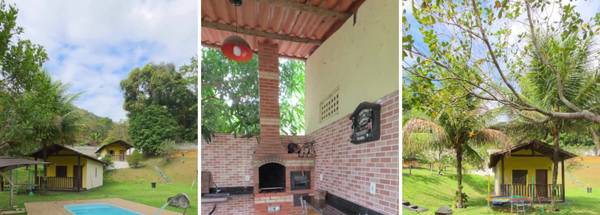
Country House with 3 Chalets for Sale in Duas Barras - Anchieta - Espírito Santo - Brazil
5000 m²
R$690,000
View property →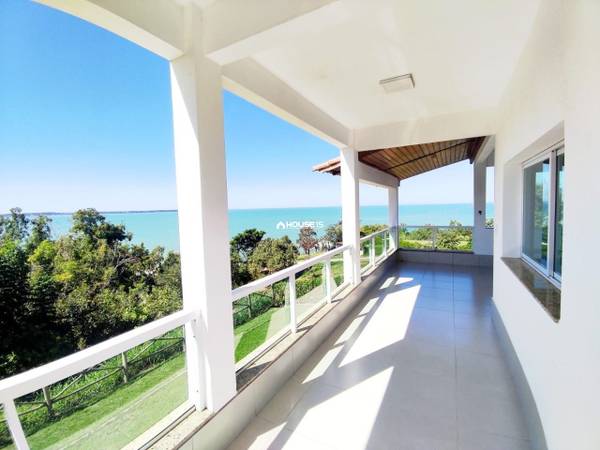
5 Bedroom House for Sale in Iriria - Anchieta - Espírito Santo - Brazil
5 bed • 5 bath • 410 m²
R$2,490,000
View property →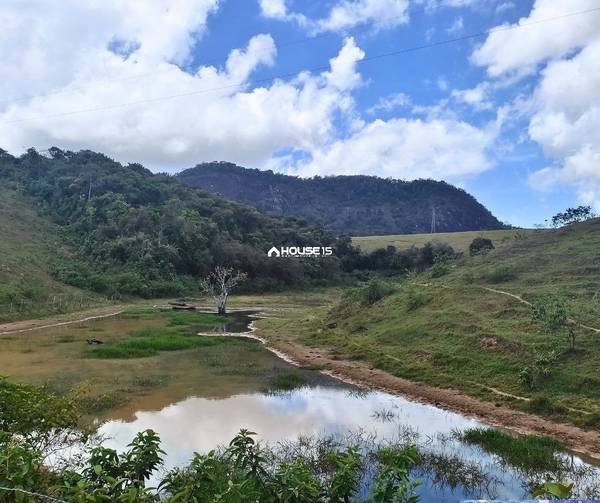
Plot for Sale in Nova Anchieta - Anchieta - Espírito Santo - Brazil
480000 m²
R$2,500,000
View property →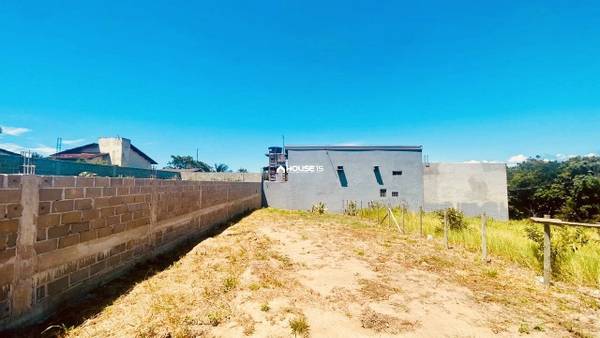
Plot for Sale in Praia de Ubú - Anchieta - Espírito Santo - Brazil
300 m²
R$200,000
View property →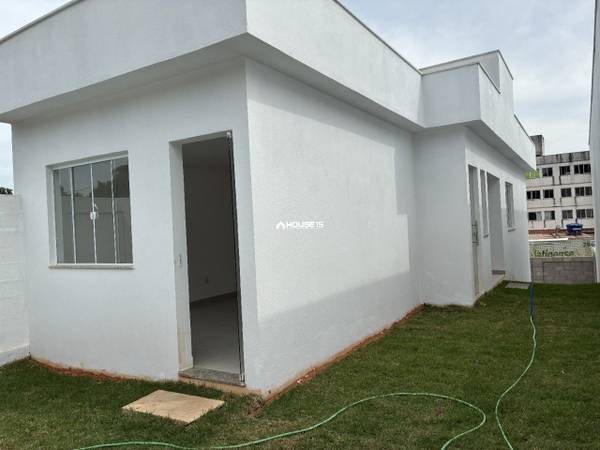
2 Bedroom House for Sale in Nova Jerusalém - Anchieta - Espírito Santo - Brazil
2 bed • 2 bath • 180 m²
R$360,000
View property →
Plot for Sale in Iriri - Anchieta - Espírito Santo - Brazil
401 m²
R$269,900
View property →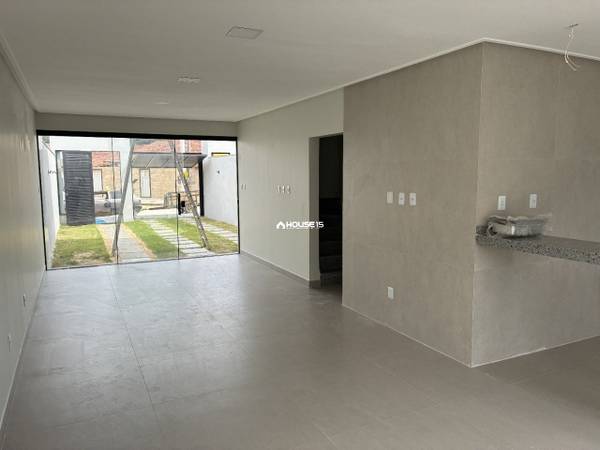
3 Bedroom House for Sale in Praia dos Castelhanos - Anchieta - Espírito Santo - Brazil
3 bed • 3 bath • 125 m²
R$850,000
View property →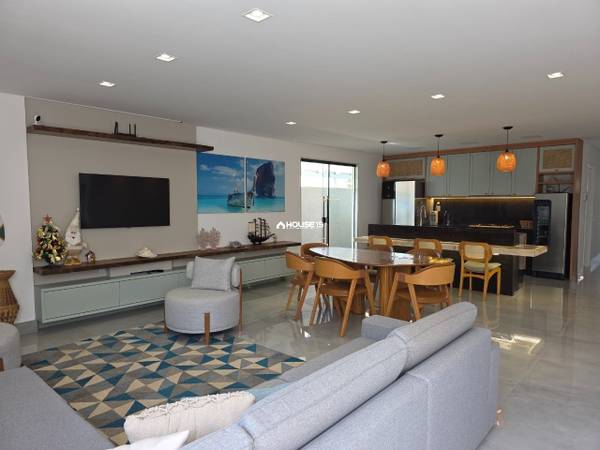
3 Bedroom Apartment for Sale in Iriri - Anchieta - Espírito Santo - Brazil
3 bed • 4 bath • 170 m²
R$1,985,000
View property →